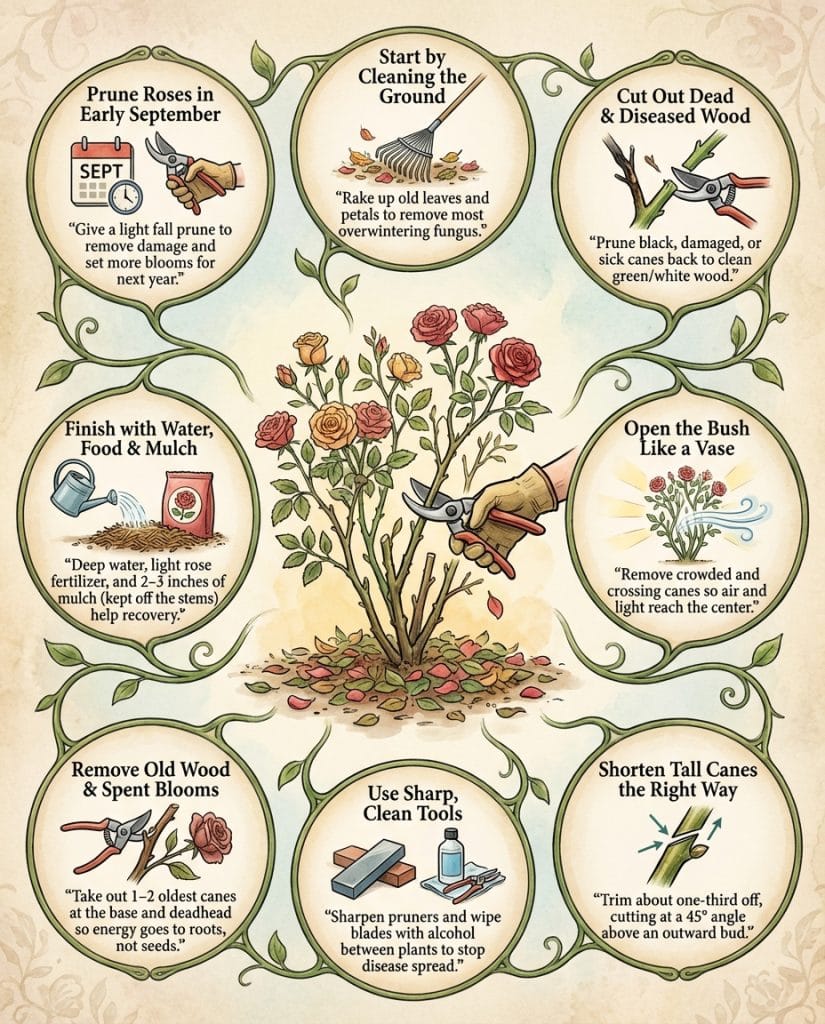
Forget what you’ve heard about waiting until spring to touch those rose bushes. September is actually a great time to set up next year’s garden for success.
While most people are putting away their garden tools, you can get ahead by giving those roses some attention now.
Why September Pruning Works So Well
Your roses actually benefit from a trim in early fall. Roses pruned in September can produce up to 30% more blooms the following season. The timing makes a real difference.
September pruning works because:
• Cooler temps mean less stress. Your plant can heal and redirect energy without summer heat draining its resources.
• It triggers fresh growth and bud setting. You’re essentially pressing a reset button that stimulates next year’s flowering points.
• Plants prepare better for winter. They enter dormancy stronger and more resilient.
• Summer damage gets removed. Those sunburned or pest-damaged parts won’t drain energy all winter.

Think of September pruning like giving your roses a tune-up before winter. They’ll come back stronger and ready to put on a great show.
Your Rose Pruning Tools
Using dull pruners can increase the risk of disease by up to 80%. Clean cuts heal faster and resist infection, so your tools matter.
You’ll need:
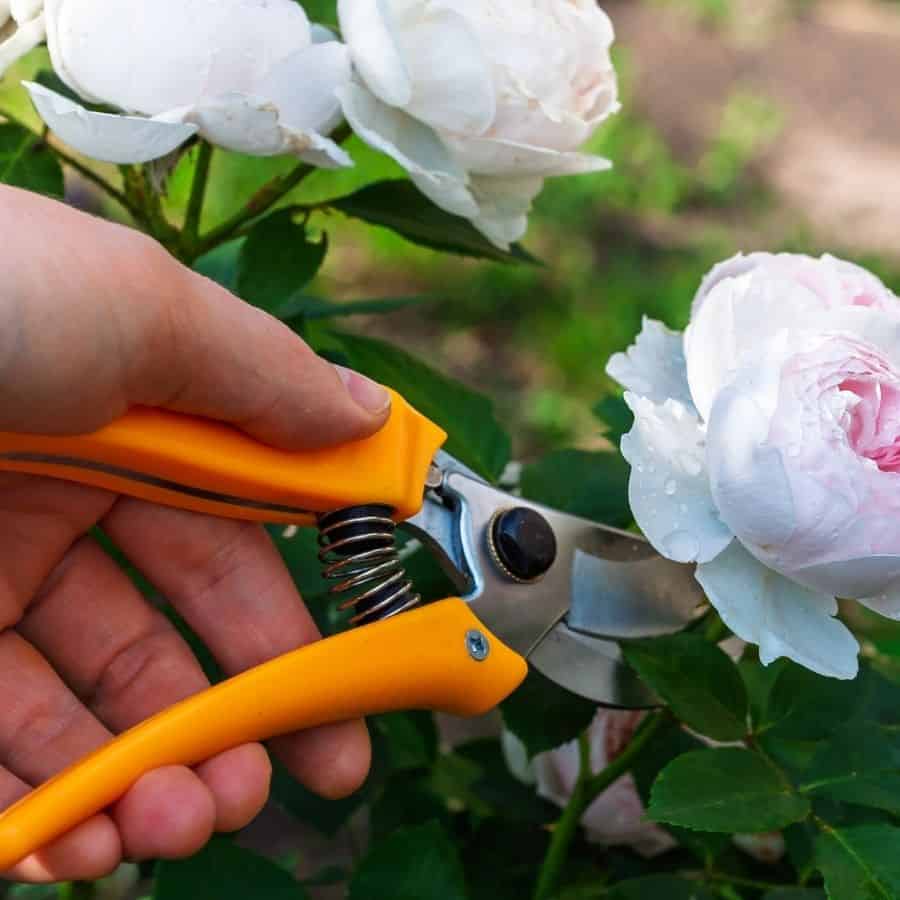
• Bypass pruners for canes up to ½ inch (keep them sharp)
• Loppers for thicker canes
• Pruning saw for old, woody canes that need serious work
• Thorn-proof gloves because rose thorns hurt
• Disinfectant spray (isopropyl alcohol works well between cuts)
I once skipped tool sanitation and accidentally spread black spot through my entire rose collection. Clean those blades between plants.
The 7-Step September Rose Pruning Process
Follow this sequence for the best results. Each step builds on the previous one.
1. Clean the stage. Remove all fallen debris around the plant. This eliminates up to 85% of overwintering fungal spores.
2. Cut the deadwood. Remove anything blackened, diseased, or damaged back to healthy green wood, where the center is white when cut.
3. Eliminate crossed canes. These create wounds where disease enters. Choose the strongest cane and remove the weaker one.
4. Create the vase. Your rose should have an open center with a vase shape. This airflow prevents mildew and black spots.
5. Trim the height. Shorten overly tall canes by one-third, cutting at 45° angles just above outward-facing buds.
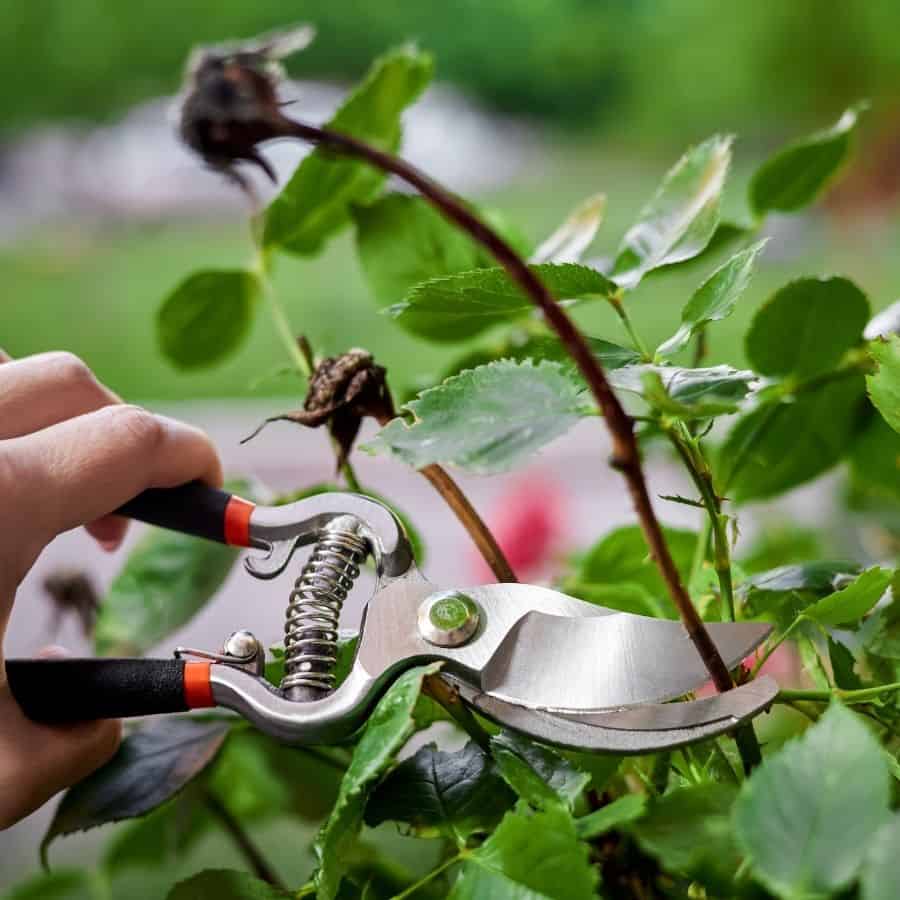
6. Deadhead thoroughly. Every spent bloom diverts energy from root strength to seed production.
7. Remove old wood. Take out 1-2 of the oldest, thickest canes at the base to encourage new growth.
The angle of your cut matters. Always cut at 45° about ¼ inch above an outward-facing bud. This prevents water from collecting on the cut surface and forces new growth in the right direction.
Post-Pruning Care
Your rose needs support after pruning. Help it along with:
• Light fertilization with balanced rose food (nothing high-nitrogen)
• Deep watering to soak the roots and reduce stress
• 2-3 inches of organic mulch around the base (keep it away from direct stem contact)
• Weekly checks for pest issues or disease
Different Roses Need Different Approaches
Each type has specific needs. Here’s what works best for each.
Hybrid Teas
These classic long-stemmed roses need focus. Maintain only 3-5 strong canes, cut back to 18-24 inches tall. Hybrid teas perform best when their energy isn’t divided among too many canes.
Floribundas
Keep these bushier by cutting back just one-third to half their height. They create their effect through volume, so don’t thin them out too much.
Climbing Roses
Focus on side shoots, not main canes. Cut laterals back to 2-3 buds from the main canes. Training climbers horizontally actually increases flowering—stems positioned parallel to the ground produce more blooms.
Shrub Roses
These need only gentle shaping. Remove dead or damaged wood and lightly shape the overall form. Shrub roses are naturally low-maintenance.
Miniature Roses
Trim lightly, about one-quarter of the height, focusing on symmetry and airflow. These small plants contain all the same parts as larger roses, just in miniature form.
Mistakes to Avoid
Your September pruning can do more harm than good if you make these errors:

• Cutting too severely. September isn’t for major renovation. Save harsh cutbacks for spring.
• Leaving stem stubs. These invite disease. Cut close to buds.
• Skipping tool sanitation. Clean your tools between plants.
• Heavy fertilizing. This stimulates tender new growth that frost will damage.
• Pruning during extreme weather. Heat waves and frost events make recovery harder.
Why This Actually Works
September pruning triggers a reset in roses. By removing targeted growth now, you’re reprogramming your plant’s hormone production and energy allocation.
Here’s what happens:
• Energy redirects to fewer, stronger pathways
• Root systems strengthen instead of supporting excess foliage
• Buds receive signals to prepare for spring
• Disease cycles break, preventing pathogen buildup
This work now pays off when spring arrives. Your roses will bloom with more vigor than they showed last year.
Grab those pruners and give your roses a September refresh. You’ll see the results next season.