Ever paired spinach with the wrong plant and watched your leafy greens struggle? You’re not alone.
I learned this the hard way when I tried planting spinach with beets. Those nutrient-hungry beets left my spinach looking pretty sad.
But the best part is that the right companions can actually help your spinach thrive.
Why Your Spinach Needs Garden Friends (Not Frenemies)
Think of your garden like a neighborhood. Some plants make excellent neighbors while others compete for nutrients and space.
The difference between new and experienced gardeners often comes down to knowing which plants work well together.
Companion planting isn’t just garden folklore. Studies from Cornell University show that strategic plant pairing can increase yields by up to 25% by naturally deterring pests and maximizing soil utilization.

11 Plants That Help Your Spinach Grow Better
Tall Protectors That Create Spinach-Friendly Shade
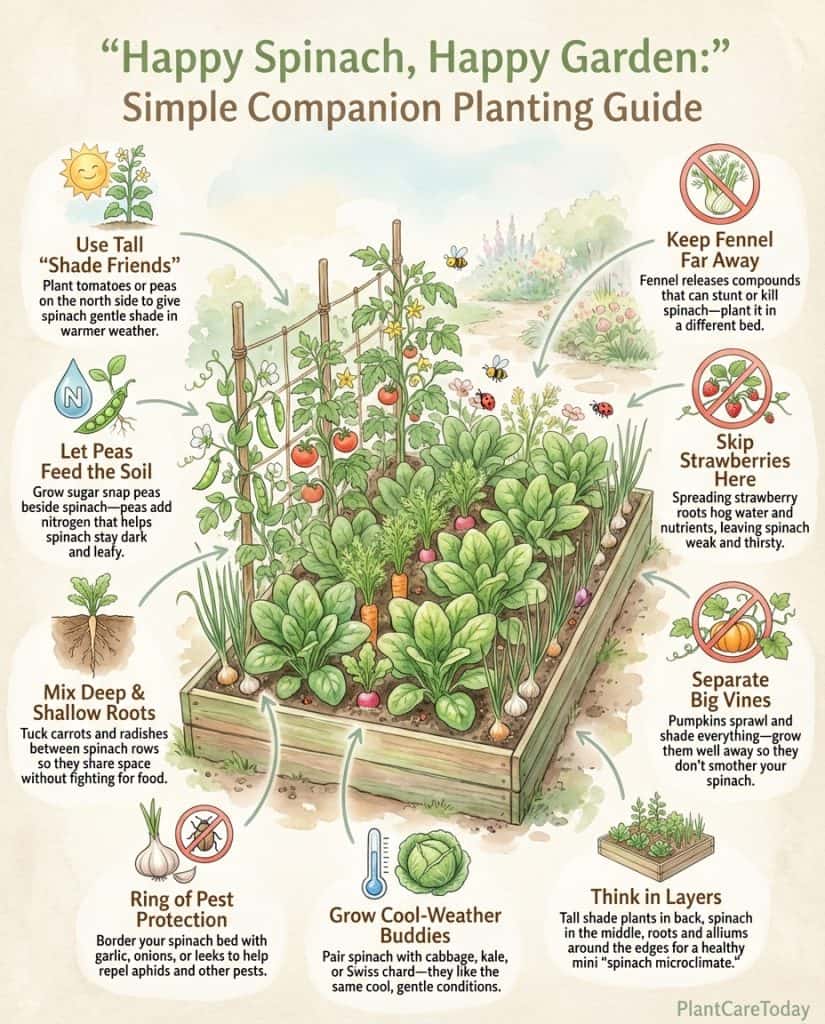
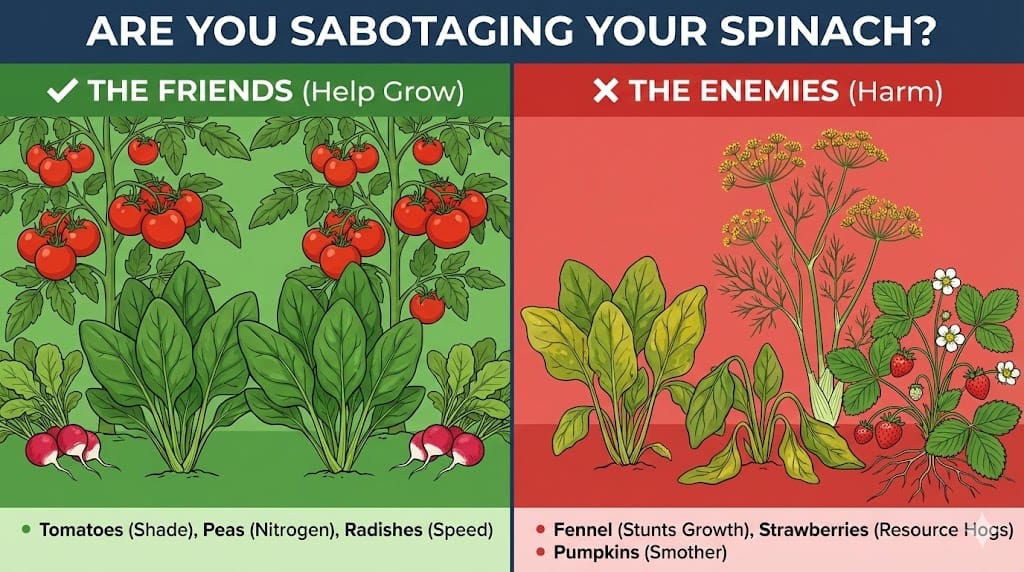
• Tomatoes: These tall plants provide dappled shade for heat-sensitive spinach leaves. They shield your spinach from harsh midday sun while producing fruit above.
• Sugar Snap Peas: These vertical climbers grow up instead of out, creating cool shade patches for spinach while fixing nitrogen in the soil.
• Cucumbers: Their sprawling vines suppress weeds and attract beneficial insects. Plus, their shallow root systems won’t interfere with your spinach’s feeding zone.
The Underground Allies (Root Vegetables That Play Nice)
• Carrots: Carrots and spinach are like perfect roommates. They use different soil layers and nutrients. Carrots go deep while spinach stays shallow, making them a space-efficient pairing.
• Radishes: These roots mature quickly (just 3-4 weeks) and don’t compete with spinach for resources. Plant them between spinach rows for a quick harvest while your spinach is still getting established.
The Pest Protection Squad
• Garlic: This aromatic bulb repels aphids and other spinach pests with its pungent compounds. Plant it around the perimeter of your spinach patch for protection.
• Onions: Similar to garlic, onions emit compounds that confuse and repel many garden pests. Their vertical growth habit means they barely take up space in your spinach bed.
• Leeks: These slender alliums repel insects and thrive in the same cool conditions that spinach loves.

The Perfect Temperature Companions
• Cabbage: This cool-weather lover matches spinach’s temperature preferences. They both thrive and struggle under the same conditions.
• Kale: Another cool-season favorite that shares spinach’s hardy nature and nutrient needs. They work well together in the same bed.
• Swiss Chard: With similar growing requirements to spinach but more heat tolerance, Swiss chard adds bright colors to your garden while maintaining the same care routine.
3 Plants Your Spinach Can’t Stand
What matters most is avoiding certain plants that really don’t work with spinach. Here are the ones to keep separate:
• Fennel: The Garden Troublemaker – This licorice-flavored vegetable might taste great in your kitchen, but it’s rough in the garden. Fennel releases compounds that can stunt or even kill your spinach. Keep this one far away from your greens.
• Strawberries: The Resource Hogs – With their aggressive, spreading root systems, strawberries compete directly with spinach for water and nutrients. Someone’s going home thirsty, and it’s usually your spinach.
• Pumpkins: The Space Invaders – Unless you’re gardening on a farm, pumpkins and spinach make terrible companions. Pumpkin vines can spread up to 20 feet in all directions, eventually shading out and smothering your spinach.
The Strategy For Spinach Success
The real trick to a healthy spinach patch comes from thoughtful plant pairing. I’ve seen struggling spinach plants improve dramatically when surrounded by the right companions.

Here’s a simple plan: plant garlic or onions around the perimeter of your spinach bed for pest protection.
Add carrots or radishes between rows for space efficiency. Finally, let tomatoes or peas create dappled shade from the north side so they don’t block too much sun.
This three-layer approach creates a spinach microclimate that supports growth and reduces issues. Your spinach won’t just survive. It’ll produce nutrient-packed leaves that make store-bought varieties look pale in comparison.
Remember, successful gardening isn’t about working harder. It’s about planting smarter and choosing the right companions for your spinach.