Sometimes tending a lawn can be as complicated, if not more so, than tending a garden. One of the biggest issues occurs when your lawn has sustained significant abuse the previous year and requires overseeding.
Overseeding grass in spring isn’t a complicated process by itself. It’s often a good time for adding fertilizer or contact herbicides when you have a busy schedule.
Perhaps the most confusing aspect is determining the temperature at which to overseed. Spring often offers a narrow window of opportunity.
What Is the Best Temperature to Overseed in Spring?
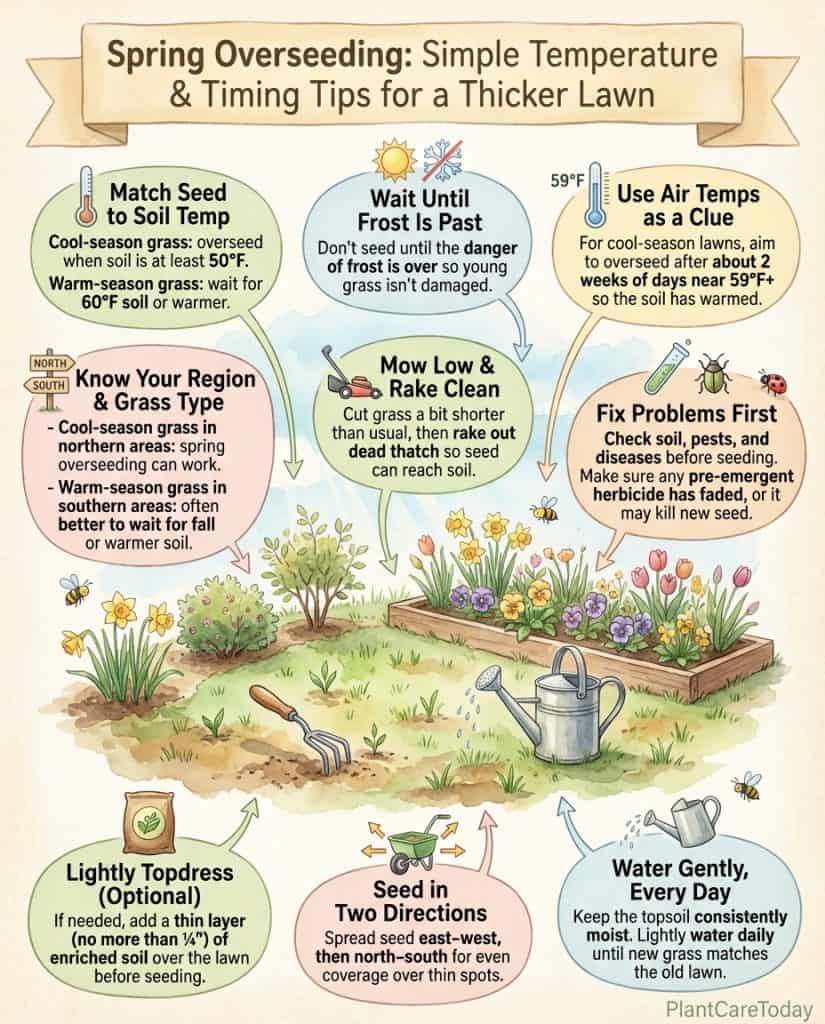
Soil temperature must be at least 50°F for cool-season grass and 60°F for warm-season grass. Ensure the danger of frost is over.
This usually falls in late April or early May, depending on whether you have a cool-season or warm-season lawn.
The Great Spring Debate
Depending on who you talk to, you’ll either be encouraged to overseed in spring or told to avoid it at all costs.
Here is what you need to know before overseeding a lawn in spring.
Why You Should Overseed in Fall: Fall Overseeding Temperature
The soil is often warmer than the air when fall begins, creating a wide window for overseeding.
Warm-season grass needs even warmer temperatures. The seedlings can often be choked out by crabgrass or other weeds, preventing them from sprouting.
Meanwhile, cool-season grasses will go dormant in hotter summer temperatures. Thus, they might not have enough time to grow before the weeds come in.
There’s a large window in the southern zones where you can overseed warm-weather grasses.
When To Spring Overseed Lawn and Grass
Use weed-and-feed or post-emergent herbicide to give your cool-season grasses a head start before weeds take over.
In the northern zones, sowing warm-season grasses too late in the year can reduce their chances of germinating before cold weather sets in.
The Verdict
Spring overseeding is generally a good move if you have a cool-weather grass lawn and live in the north or northeast. However, it is not a good choice if you have a warm-weather grass type and live in the South or Southwest.

Best Temperature For Overseeding: Ground Temperature vs. Air Temperature
A common mistake people make when preparing to overseed is to rely on the weather forecast and the air temperature.
Yet determining soil temperature for overseeding can be complicated because many factors (sun exposure, moisture, soil type, etc.) can affect it.
However, you can estimate soil temperature in the fall by reviewing your weekly weather forecast.
It’s slightly more complex for spring. The best time to overseed is when the air temperature has been at least 59°F for two weeks.
This will help ensure the ground temperature is at least 50°F when you overseed cool-weather grasses.
Overseeding In Spring: An Overview
The overseeding process is much less complicated than figuring out the temperature or whether to wait for fall.
Here’s a quick rundown of the process to get you going:
Step 1: Mow
Cut the grass slightly shorter than usual, then rake it over.
This practice removes debris, dead grass, and clippings, and loosens the topsoil.
Step 2: Fix Major Issues
Now is an excellent time to test soil quality and ensure it’s pest-free and free of other significant issues.
It is also a good time to ensure any pre-emergent herbicides have mostly dissipated, as they often kill grass seed.
Once you’ve addressed pests, diseases, and other issues, proceed to the next step.
Step 3: Amend the Soil
If you’re using pure seed, rake a thin layer of enriched soil over the existing lawn, but avoid adding more than ¼” inch.
You can skip this step if you’re using a seed mix with its own fertilizer or amendments.
Step 4: Overseed
Now you’re ready to sow the seed using your preferred spreader.
The best way is to cover your lawn in one direction (ex, east-west), then go back in the other direction (north-south).

Step 5: Water
Finally, water the lawn and (if you choose) fertilize it.
Be sure to water the lawn at least once per day until the new grass catches up with the rest of the lawn.