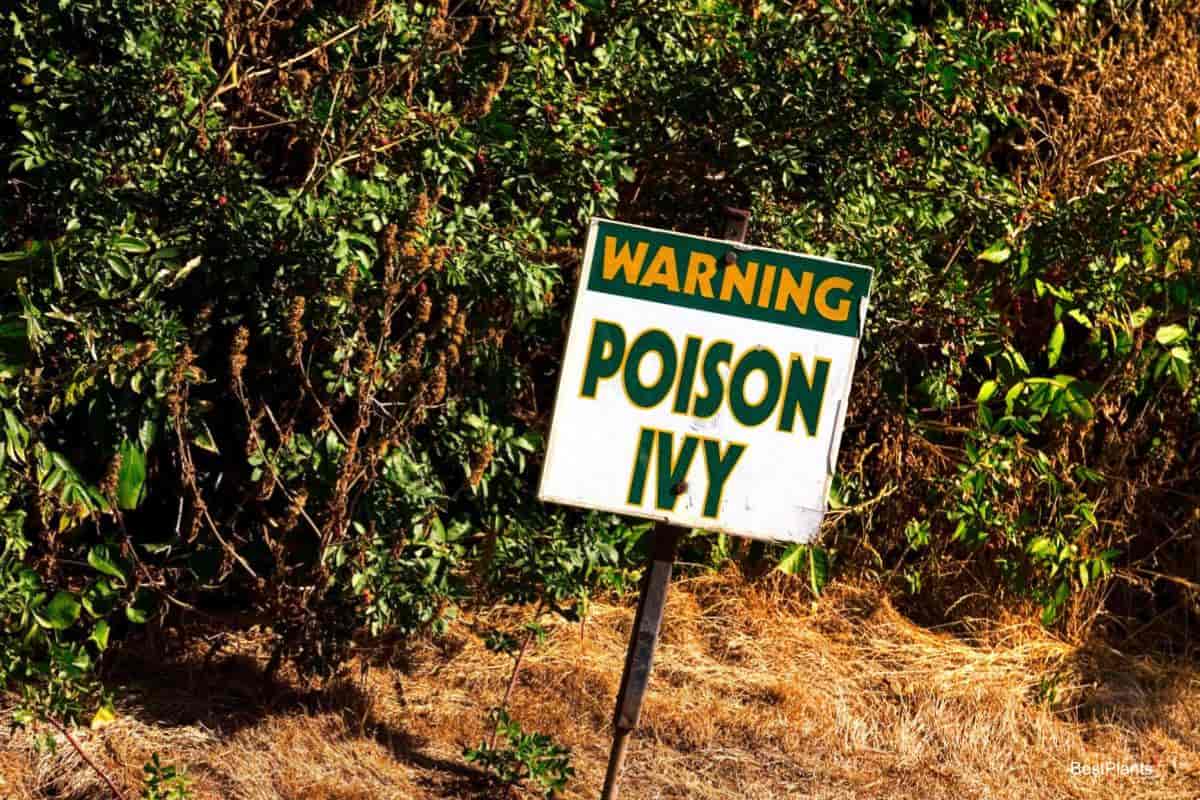
Every year, millions of people suffer itching, swelling, blisters, and even sometimes prostration and death by touching the poison ivy that grows anywhere from Maine to Florida and Nebraska.
The poison oak of the Pacific States has similar effects. Doctors and druggists are primed with cures, none of which seems entirely satisfactory to the patient—but perhaps they help.
Poison Ivy: Prevention
Prevention, in any case, works best.
Step 1 in prevention: Knowing poison ivy when you see it.
Step 2: Warding off skin irritation after contact.
In a moment, we’ll look at a new idea, simpler and easier than most of the old ones.
Know Poison Ivy’s Characteristics
First, let us look at the ivy itself and how its dire touch works.
The eastern plant, Toxicodendron radicans (Rhus Toxicodendron), grows as a vine, ground cover, or shrub.
Its long stems, clinging by aerial rootlets a fraction of an inch long, roam over fences and rocks or trail along under the dead leaves of the woodland floor, putting up everywhere the telltale three-parted leaves.
When well established, they stretch out stiff branches 4′ or 5′ feet long, against which your cheek or shoulder may easily brush.
Where poison ivy climbs a tree, it may develop a rope-like stem bristling with rootlets and often too big to put your hand around.
Don’t put your hand around it either, for the rootlets can poison you.
Often the birds sitting in harmless Boston ivy or English ivy that ornaments a brick wall may drop seeds of the poison ivy berries they have eaten.
These germinate at the base of the wall, mingle unnoticed with the innocent vines, and may poison anyone who passes too near.
Examine the ivies on your walls or your neighbors’. You may be surprised.
Unexpected Poison Ivy Invasion
Another unexpected invasion may come in the flower bed or the vegetable garden.
Do you know how to distinguish poison ivy seedlings among the weeds springing up?
The seedlings produce leaves with the typical three leaflets after they reach a height of 4″ or 5″ inches.
Before that, you could not easily spot them. Just handling those tiny seedlings may raise blisters on your hands.
Three leaves! A characteristic sheen! Small variations in the edges of the leaves!
There are the main keys to identifying poison ivy.
Unless you know just how the green of the leaves darkens through the season, get some friend who can identify the leaves to take you for “a poison ivy walk.
Practice until you can spot the characteristic three-leaf cluster every time. Then, learn how to tell nonpoisonous three-leaf plants by their different color.
Different Species Resembling Poison Ivy
The poison oak of the Pacific coast, Toxicodendron diversilobum, resembles poison ivy but tends more to shrubby growth.
Worse is poison sumac or poison ash, Toxicodendron vernix, found anywhere east of the Mississippi, but only in bogs and wet places.
Its smooth, toothless leaflets look more like those of ash than sumac. The leaf stalk, however, is commonly red.
In fall, poison sumac’s white berries mark it plainly like those of poison ivy.
It takes its toll among blueberry pickers, as few others walk in the bogs. Occasionally though, it springs up on the bank of a resort lake or along a stream.
How Poison Ivy Works
Now, how do all these various vines and trees poison you?
Susceptible persons swear they have only to walk near poison ivy when the wind blows across it, and they will come down with the distressing symptoms.
This isn’t true at all. Most of us are unobservant, failing to notice what leaves we touch.
Peter Kelm, the amiable Finnish botanist who explored North America before the Revolution, said, “I was acquainted with a person who, merely by the noxious exhalations of it (poison sumac) was swelled to such a degree that he was as stiff as a log of wood, and could only lie turned about in sheets.” Well, maybe. Poisoning even from touch is rarely that bad, though bad enough.
Every part of the plant, living or recently dead, is more or less covered with minute droplets of a sticky oil—the poison.
These droplets are picked up by your skin when it touches the ivy. After several hours, the oil eats into the skin, and itching begins.
Depending on your reaction, you may blister or swell, or both, or you may feel no ill effects, for some persons are immune part or all of the time.
If you have touched poison ivy, wash right away. The oil comes off with soap and water or rubbing alcohol, and the sooner you clean your skin, the better your chance of getting it all off. Rinse with rubbing alcohol, a poison plant wash or dishwashing soap and lots of water, and scrub under your fingernails with a brush.
Washing does not spread the rash. The rash shows up only where the oil touched your skin, so you can’t spread it over your body by scratching. If it seems to spread, it is because the oil soaked in at different rates, or because you touched it again on clothes, tools or under your nails.
Removing Ivy Poisoning
Think a moment.
On your skin are droplets of sticky oil too small to see. They must be removed immediately.
The best way to get them off is to wash them off. Don’t rely on rubbing dry peat moss, dust or sand over your skin. Use soap and cool water, rubbing alcohol or a poison plant wash, as soon as you can.
Even if you have merely brushed a poison ivy leaf with the back of your hand or your cheek, wash that spot right away instead of wiping it on your shirt sleeve. The oil sticks to clothing and stays on it until it is washed off, so change out of anything that touched the plant and launder it separately.
You can get ivy poisoning from the hair of the dog, even though the dog is immune.
The worst cases of ivy poisoning often come from the smoke of a fire in which poison ivy is burning.
The oil droplets then float through the air on particles of carbon or carbon compounds that compose the smoke. So beware of the smoke from burning brush or leaves.
Killing Poison Ivy: Another Prevention Method
Eating poison ivy leaves may cause severe illness and, rarely, death.
An ancient claim was that immunity could be gained by this method. Do not believe this!
There is no proven shot or serum that will make you immune. The FDA found too little evidence that poison ivy extract shots were safe and effective and revoked the licenses of most of them, and researchers say immunotherapy still needs more work. The best protection is to learn to recognize the plant and avoid it.
If you do get a rash, see a doctor if you have a fever over 100 degrees, if the rash has pus or soft yellow scabs, if the itching keeps you awake at night, if the rash spreads to your eyes, mouth or genitals or covers more than a quarter of your skin, if it isn’t getting better within a few weeks, or if you have trouble breathing.
There’s one other part of the prevention method. It comes after you learn to identify poison ivy in its various forms.
The vines and shrubs can be killed with an herbicide that contains glyphosate, triclopyr, or a 3-way mix of 2,4-D amine, dicamba and mecoprop. Triclopyr works best after the leaves are fully open in spring and before they change color in fall. Glyphosate works best from about two weeks before to two weeks after the plants bloom in early summer. Ammate, the DuPont ammonium sulfamate weed killer once used for this, is no longer registered with the EPA.
If poison ivy is mixed in with other plants, cut it back and spray or paint the herbicide only on the freshly cut stems or stump, so the plants you want to keep are not hit. Repeat treatments may be needed, and it can take one to several weeks to see whether the poison ivy is dead.
Cautions:
Wear gloves, long sleeves and long pants, and throw disposable gloves away after use.
Read and follow the label directions for any herbicide you use. Dead vines and roots can still cause a rash for a couple of years, so handle them with the same care.
Summarizing, then—Don’t touch! Recognize the plants! Kill them! If you have touched, wash right away with soap or rubbing alcohol and lots of water.