Let me make a confession: tomatoes nearly broke me as a gardener. These seemingly simple plants had me ready to throw in the trowel.
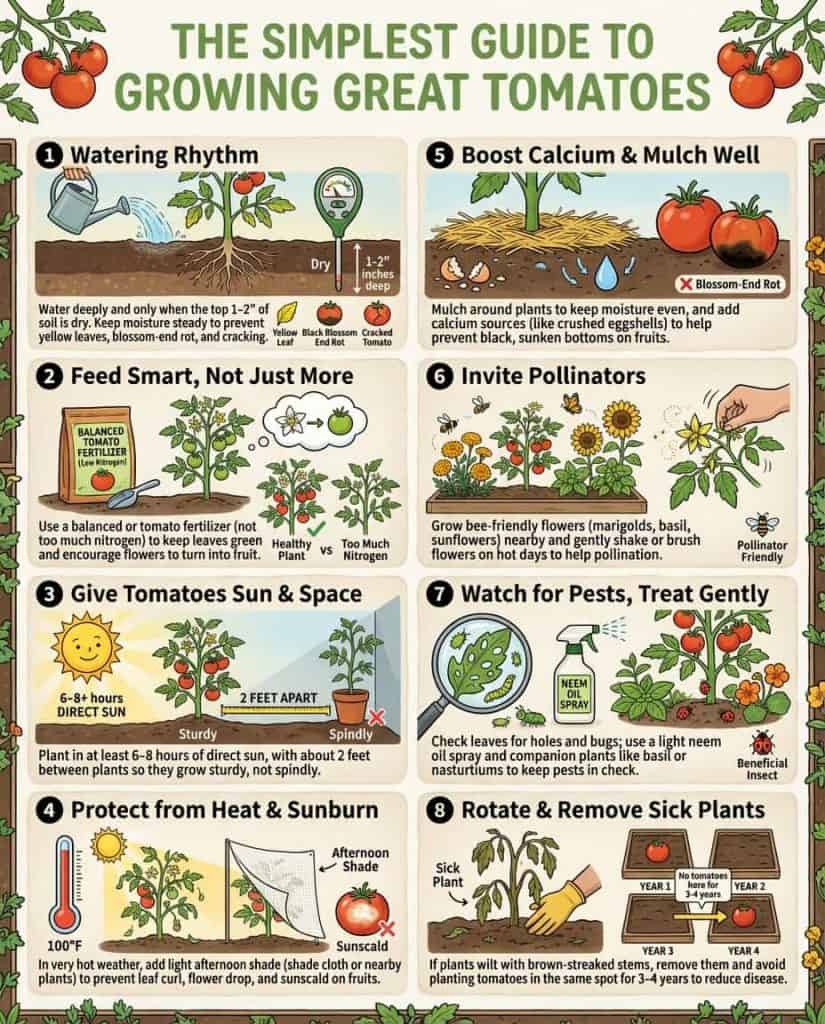
But what I learned changed everything. Did you know that most home tomato problems can be solved with just a handful of simple fixes?
I went from wilted disappointment to harvesting nice, juicy tomatoes, and you can too.
Yellow Leaves: Your Tomato’s First Cry for Help
Seeing yellow leaves at the bottom of your plants? Don’t panic. This is actually quite normal for young tomato plants. I used to worry every time I saw them.
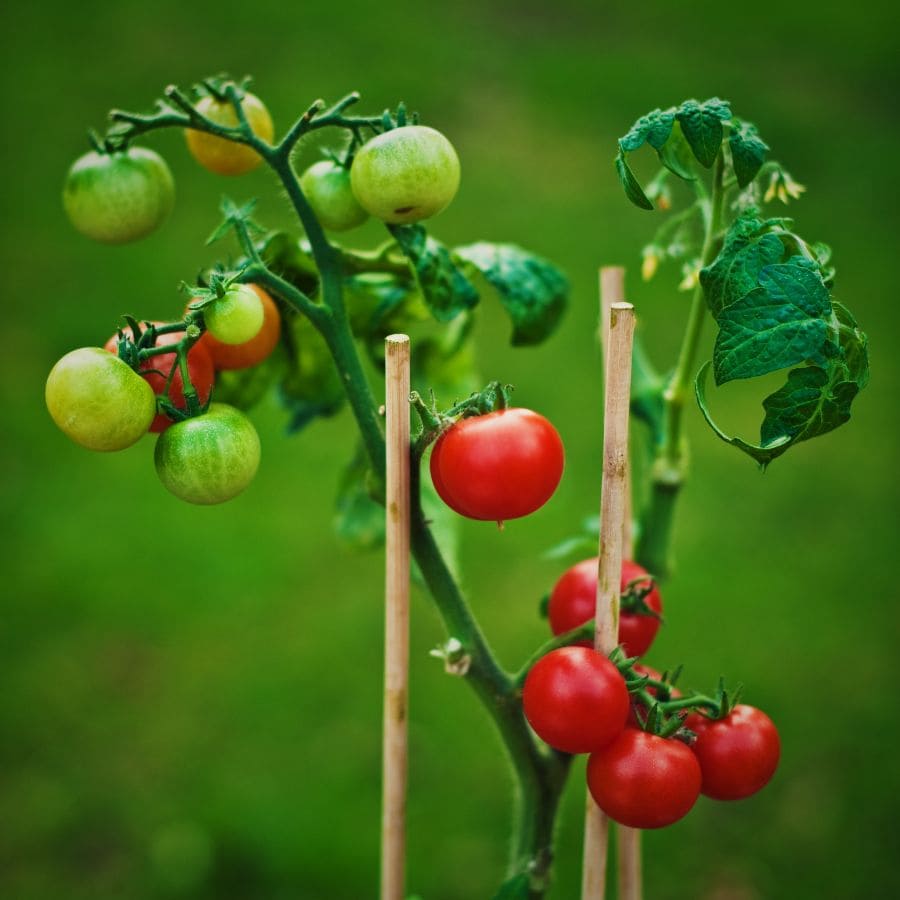
The real trick with your tomatoes is understanding what those yellow leaves are telling you:
- Overwatering is often the culprit. Tomatoes hate wet feet
- Nitrogen deficiency can turn your plants yellow pretty quickly
Quick Fix: Trim those yellow leaves (they won’t turn green again anyway), and only water when the top 1-2 inches of soil feels dry. Add a balanced fertilizer if your plants look truly hungry.
Curling Leaves: The Stress Signal You’re Missing
When tomato leaves start curling or rolling, your plant is stressed. Many people ignore these early warning signs.
Your curling leaves are usually pointing to one of these issues:
- Heat stress (your plant is struggling with the temperature)
- Wind damage (they’re getting tossed around too much)
- Inconsistent watering (they never know what to expect)
Rescue Action: Provide shade during peak heat hours and water deeply on a consistent schedule. Your tomato wants a predictable routine.
Black Bottom Blues: The Calcium Connection
Those ugly black spots on the bottom of your tomatoes? That’s blossom end rot. I was surprised to learn that it’s not actually a disease. It’s a calcium issue that affects up to 30% of home tomato crops.
The Fix: Water evenly (inconsistent moisture blocks calcium uptake), mulch around plants, and add crushed eggshells to your soil for a calcium boost. Your tomatoes will go from spotted disappointments to nice-looking fruit.
Flower Drop: Why Your Blooms Are Abandoning Ship
Nothing’s more frustrating than watching those promising yellow flowers fall off. Forget what you’ve heard about fertilizer being the main culprit. Heat is often the real problem here.
When temperatures climb above 90°F during the day or stay above 75°F at night, tomato pollen becomes sterile. No pollination means no fruit.
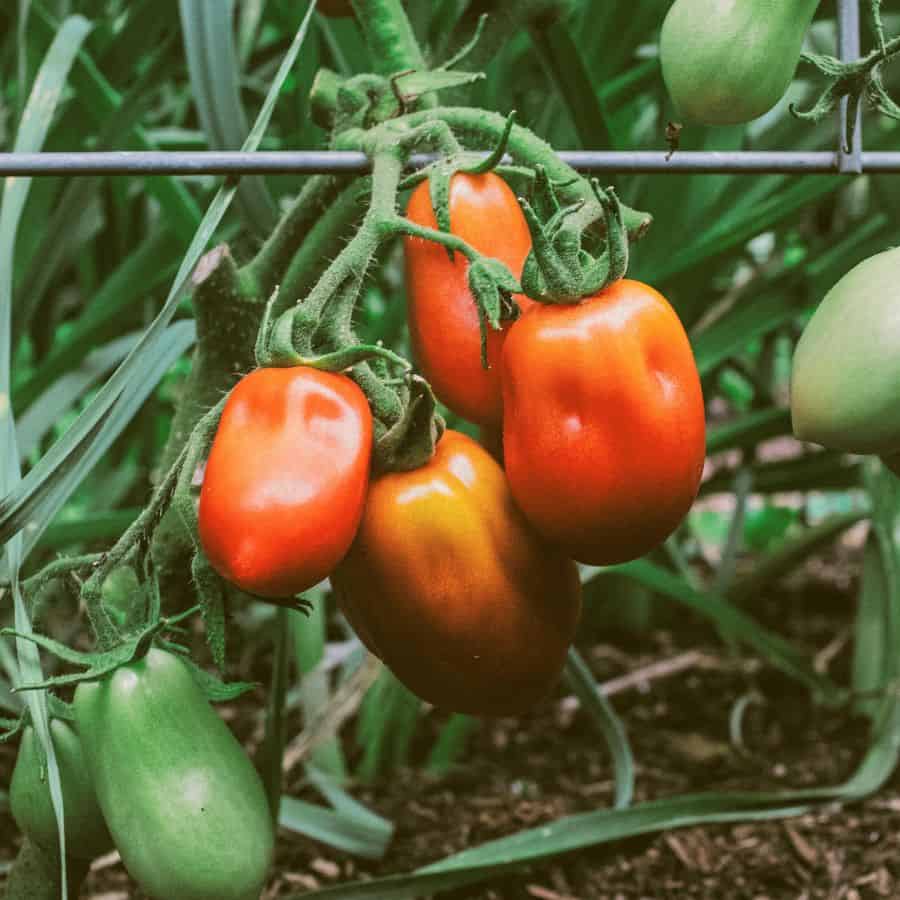
Bloom-Saving Solution: Try hand-pollinating with a small paintbrush in the morning. In extreme heat, provide afternoon shade or use shade cloth. Your plants will hold onto those blooms better.
All Show, No Fruit: The Pollination Problem
Beautiful plants with tons of flowers but zero fruit? The key point is that excessive nitrogen produces plants with all leaves and no fruit.
Fruiting Fix: Switch to a balanced fertilizer or one specifically for tomatoes (look for higher middle and last numbers on the NPK rating).
Plant pollinator-friendly flowers nearby, such as marigolds, sunflowers, or basil, because they attract the beneficial bugs that help pollinate your tomatoes.
Split Personalities: Why Your Tomatoes Are Cracking
Cracked tomatoes look like they’ve literally burst at the seams, and that’s essentially what’s happening. The difference between new and experienced gardeners is usually consistent watering habits.
Crack Prevention: Water deeply and consistently. After a dry spell, don’t suddenly drench your plants. Ease back into regular watering. Mulching is your best tool here, helping maintain steady soil moisture.
Spindly Stems: The Weaklings of Your Garden
If your tomato plants look thin and weak, they’re likely suffering from insufficient sunlight or overcrowding.
Strengthen Strategy: Relocate to a spot with at least 6-8 hours of direct sunlight, and give each plant enough space (at least 2 feet apart for most varieties). Tomatoes need space, sun, and lots of food to grow strong.
Holey Leaves: The Pest Invasion
Tiny holes appearing in your leaves? You’ve got unwelcome visitors, likely flea beetles, treating your tomato leaves like an all-you-can-eat buffet.
Pest Patrol: Mix 1-2 tablespoons of neem oil into a gallon of water, then spray plants thoroughly. For a natural approach, companion plant with basil or nasturtiums. They help keep pests away from your tomatoes.
Wilting Woes: When Watering Isn’t Working
If your plants are wilting despite moist soil, you might be facing root rot or vascular disease like fusarium wilt.
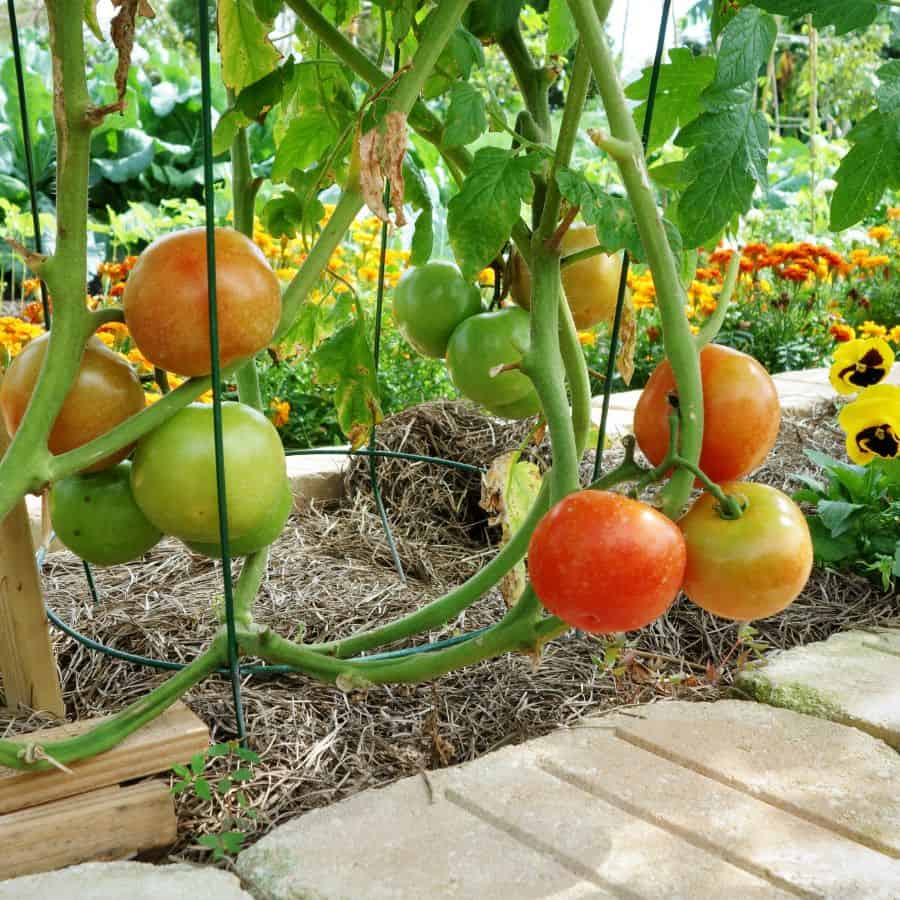
Drastic Measures: Unfortunately, you’ll need to remove severely affected plants. Check stems; if they’re brown inside, it’s too late. Practice crop rotation (don’t plant tomatoes in the same spot for 3-4 years) to break disease cycles.
Sunburn: Protecting Your Precious Fruits
Tomatoes can get sunburned, too. Those white or yellow patches on sun-facing fruits are caused by excessive heat and direct sunlight.
Sun Protection: Provide dappled shade during intense afternoon heat. Consider harvesting slightly early and ripening indoors during heat waves. Mulch helps here too, keeping root zones cooler and reducing stress.