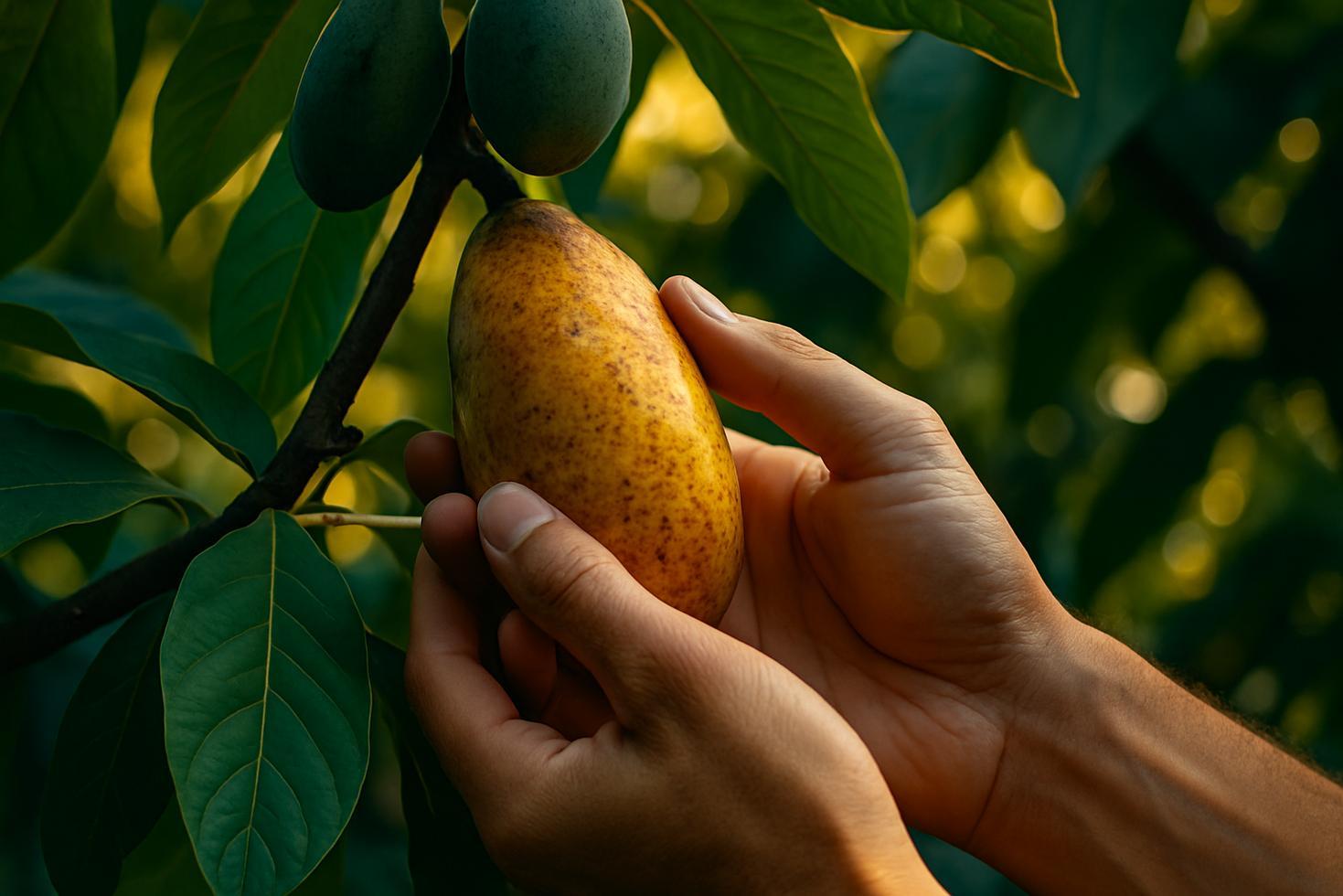
2,500 pesticide-free edible plants grow across 7 acres in southeast Atlanta — where the nearest grocery store was once a 30-minute bus ride away, the largest public food forest in the United States now grows.
The Urban Food Forest at Browns Mill is a 7-acre public food forest in southeast Atlanta holding 2,500 edible and medicinal plants — fruit trees, nuts, herbs, mushrooms, and vines — all free to harvest, with no fee and no fence. It sits on a former pecan farm in the Browns Mill neighborhood, a corner of the city where 22.3% of the Atlanta metro population lives in census tracts flagged as both low-income and low-access to a supermarket. The Conservation Fund acquired the land in 2016. Atlanta Parks and Recreation now manages it alongside partner organizations and more than 1,000 volunteers.
That pecan farm detail matters. The soil here already knew how to grow food. What changed was who the food belonged to.
How the Browns Mill Food Forest Is Structured as a Working Ecosystem
The forest uses an urban agroforestry model built in layers. Fruit and nut trees form the canopy. Shrubs grow underneath. Herbs, vegetables, and mushrooms fill the floor. Vines climb through the gaps.
This layered structure means each plant supports surrounding plant health by creating shade, fixing nutrients, or attracting beneficial insects. Nothing needs to be trucked in or chemically managed. The whole system is pesticide-free by design.
Species on site include pawpaw, elderberry, fig, passionflower, and shiitake mushrooms, among hundreds of others. Sources also describe at least 100 fruit trees and 30 garden beds within the 7 acres.
Why Browns Mill Neighborhood Was the Site for Atlanta’s Food Access Experiment
The Browns Mill neighborhood had no grocery store reachable without a 30-minute bus ride. Atlanta’s broader policy goal, reported across multiple sources, was to put healthy food within half a mile of 85% of residents by 2022. The food forest was one direct response to that gap.
Federal funding supported the project: a $86,150 USDA Forest Service Community Forest and Open Space Program grant was part of a $164,000 total federal contribution toward the site. The city’s purchase price for the land was $157,384. The airport — Hartsfield-Jackson — is about 10 minutes away, underscoring how central yet underserved this location actually was.
What “Public” Means at the Browns Mill Food Forest
Anyone can walk in and harvest. No fee, no membership, no appointment. That open-access model distinguishes it from community garden plots, which typically assign beds to individuals. Here, the entire 7 acres functions as shared infrastructure.
Sources describe it as a park visitors are allowed to eat. That framing captures something the acreage alone doesn’t: the forest isn’t a conservation preserve. It’s a functioning food resource built into the public park system.
—
A former pecan farm, land once grown for private profit, now feeds a neighborhood on its own terms. The plants don’t know they’re making history. The people filling their bags do.
Frequently Asked Questions
Where exactly is the Urban Food Forest at Browns Mill?
It’s in the Browns Mill neighborhood of southeast Atlanta, Georgia, approximately 10 minutes from Hartsfield-Jackson Atlanta International Airport.
Is it really the largest public food forest in the United States?
Yes. Multiple sources, including CNN, PBS Georgia Outdoors, and The Conservation Fund, describe it as the largest public food forest in the country.
What kinds of plants grow there?
The 2,500 plants include fruit trees, nut trees, vegetables, herbs, mushrooms such as shiitake, and vines including passionflower — all pesticide-free.
Who maintains the food forest?
Atlanta Parks and Recreation manages the site, supported by partner organizations and more than 1,000 volunteers who assist with planting, watering, and upkeep.