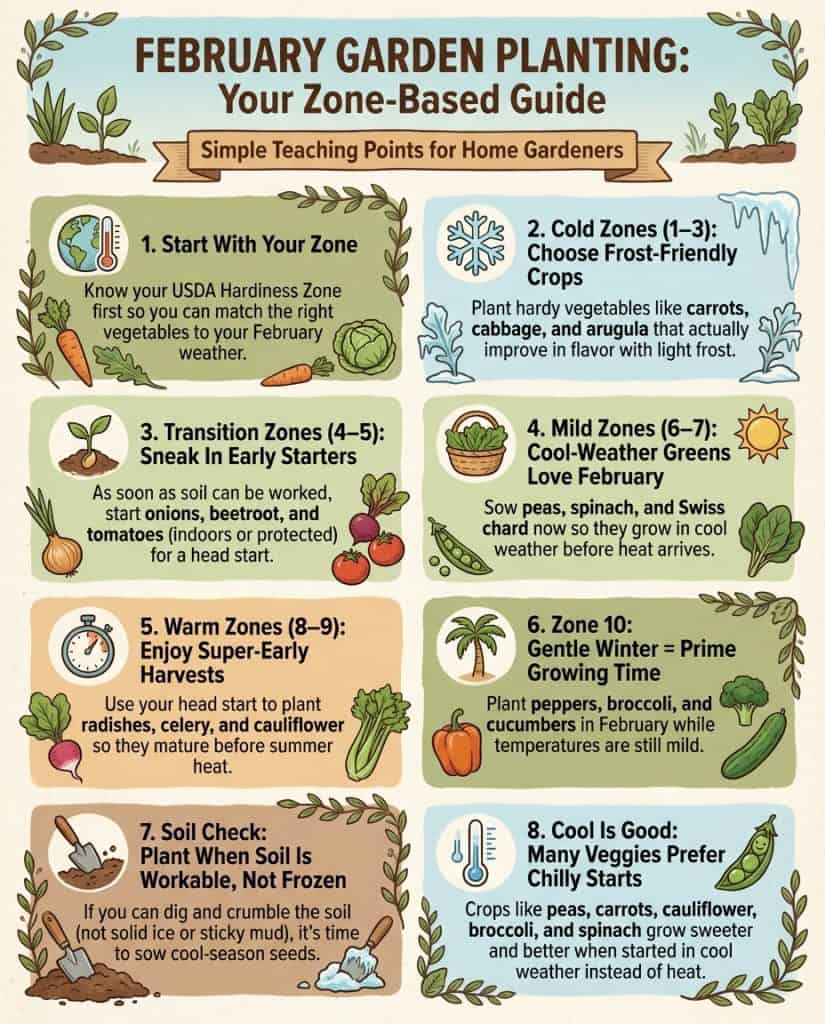
Is your garden tool shed gathering dust this February? While most people are staying cozy inside, experienced gardeners know this is actually prime planting time for many vegetables, depending on where you live.
February isn’t just for planning. It’s a real opportunity to get a head start on the growing season.
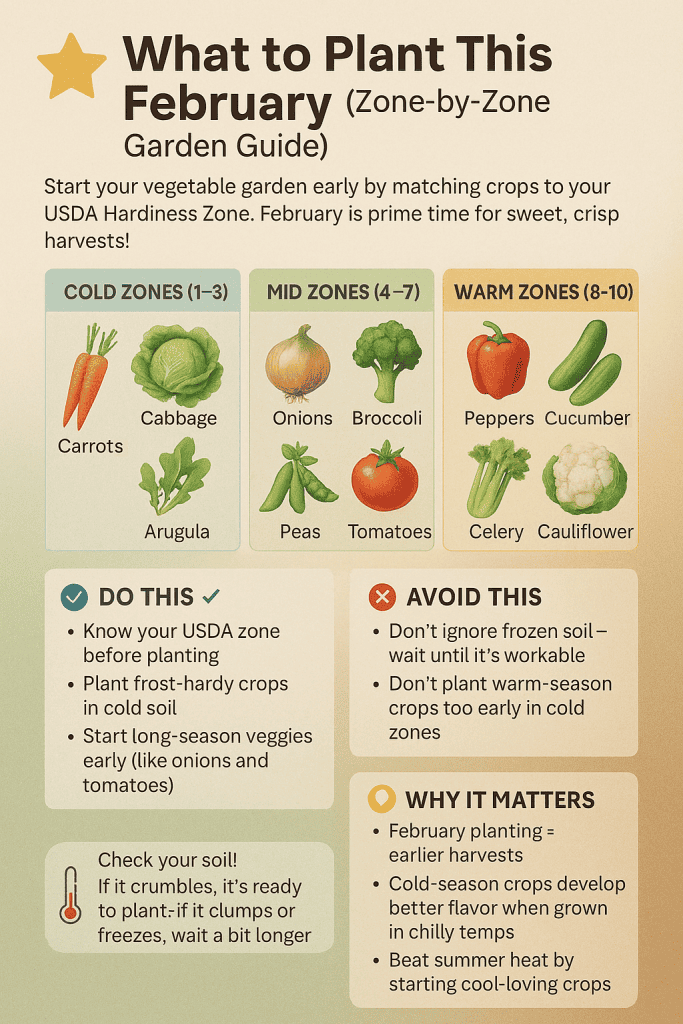
Start Here: Know Your Zone
Before you start planting, you need to know your USDA Hardiness Zone. This simple classification tells you what will actually grow in your specific climate and when to plant it.
The difference between new and experienced gardeners often comes down to understanding their zone and working with it.
Once you know yours, you can match the right vegetables to your February conditions.
Zones 1-3: Cold-Hardy Vegetables
Living in a cold climate doesn’t mean you can’t garden. These vegetables actually do well in chilly conditions.
- Carrots: These get sweeter after light frosts. The cold triggers them to convert starches to sugars.
- Cabbage: February planting gives them time to develop good flavor. A touch of frost makes them crispier and sweeter than warm-weather crops.
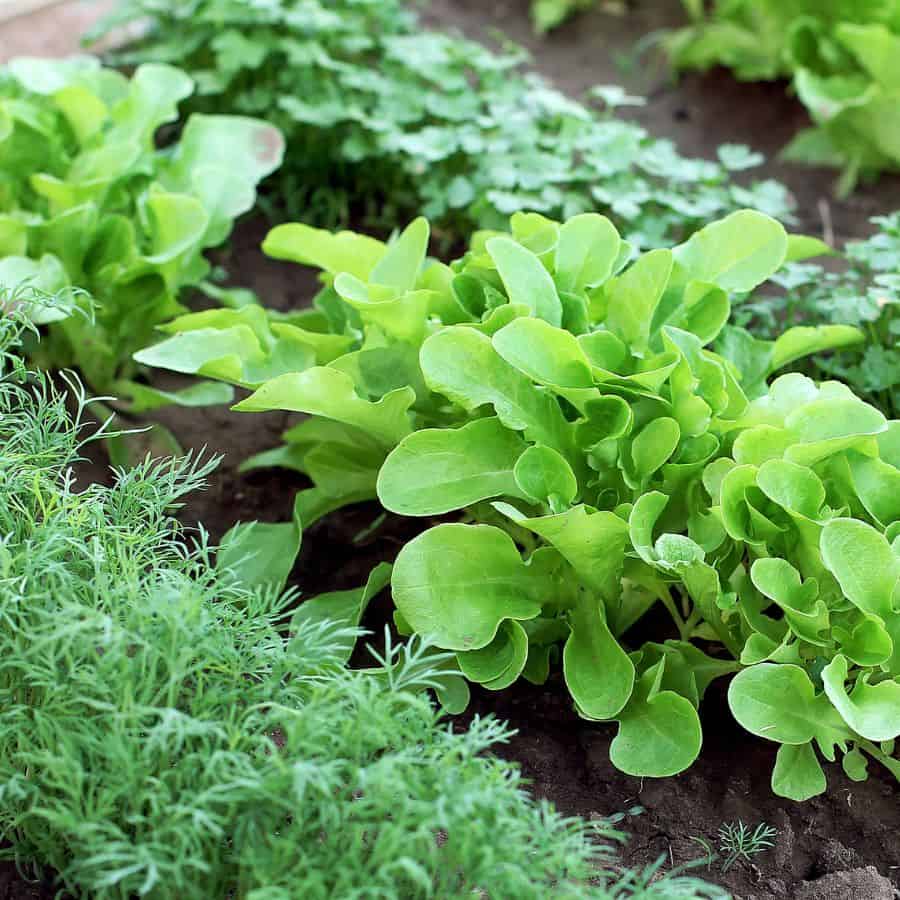
- Arugula: This peppery green handles freezing temperatures well. Plant in well-drained soil with plenty of sunlight.
Zones 4-5: The Transition Zone
Your garden is starting to wake up. These vegetables can handle early planting.
- Tomatoes: If your soil isn’t frozen solid, you can actually start these now for an early harvest.
- Onions: February is a good time to plant onion sets. They need a long growing season, so early planting helps with bulb development.
- Beetroot: These root vegetables tolerate cold well. You can sow as soon as the soil can be worked.
Zones 6-7: The Sweet Spot
Gardeners in these zones have good conditions for February planting:
- Peas: Plant these before the last frost. That cold period actually enhances their sweetness.
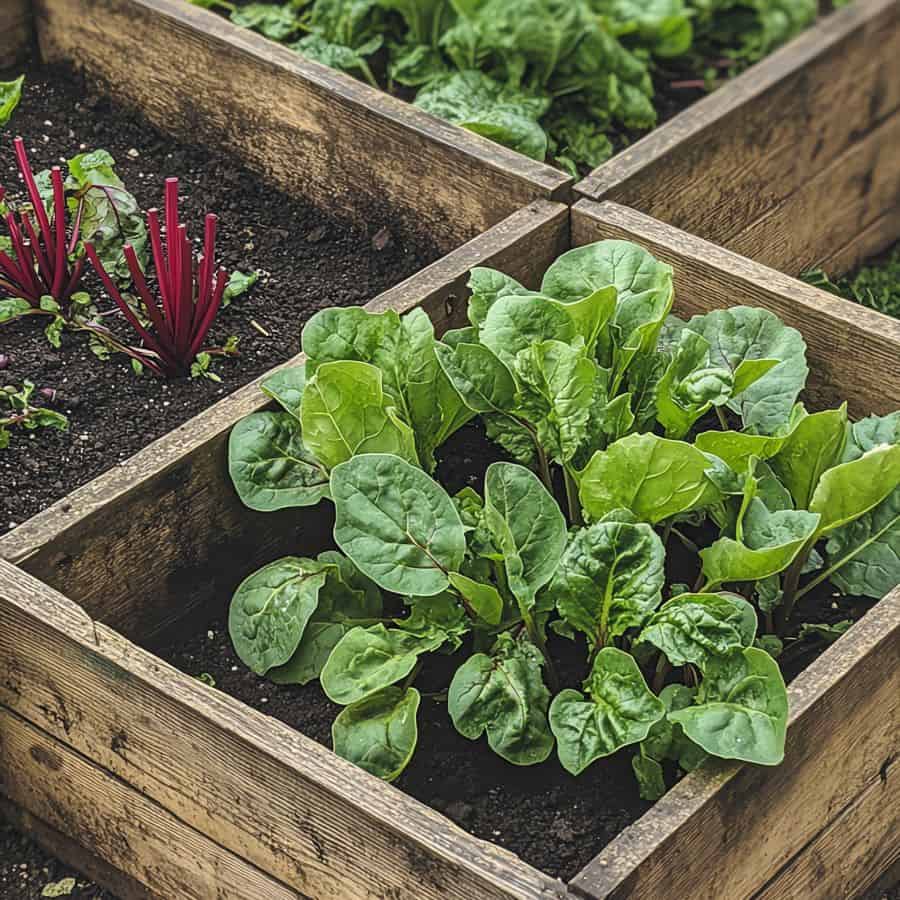
- Swiss Chard: This nutritious green can be planted now for an April or May harvest. The colorful stems look great in the garden, too.
- Spinach: Spinach doesn’t like heat. February planting gives it the cool weather it needs before temperatures rise.
Zones 8-9: Early Harvest Zone
You can get ahead of other regions with February planting:
- Celery: This needs temperatures consistently above 39 °- 44°F to avoid bolting. February offers a good planting window for the 3-4-month growing period.
- Radishes: These mature in as little as 3-4 weeks when planted in February. One of the fastest crops you can grow.
- Cauliflower: This actually does better with a cold start. February planting allows heads to develop before summer heat arrives.
Zone 10: Year-Round Growing
Your mild winter opens up more options:
- Peppers: February’s milder temperatures create better planting conditions than later, when it’s too hot.
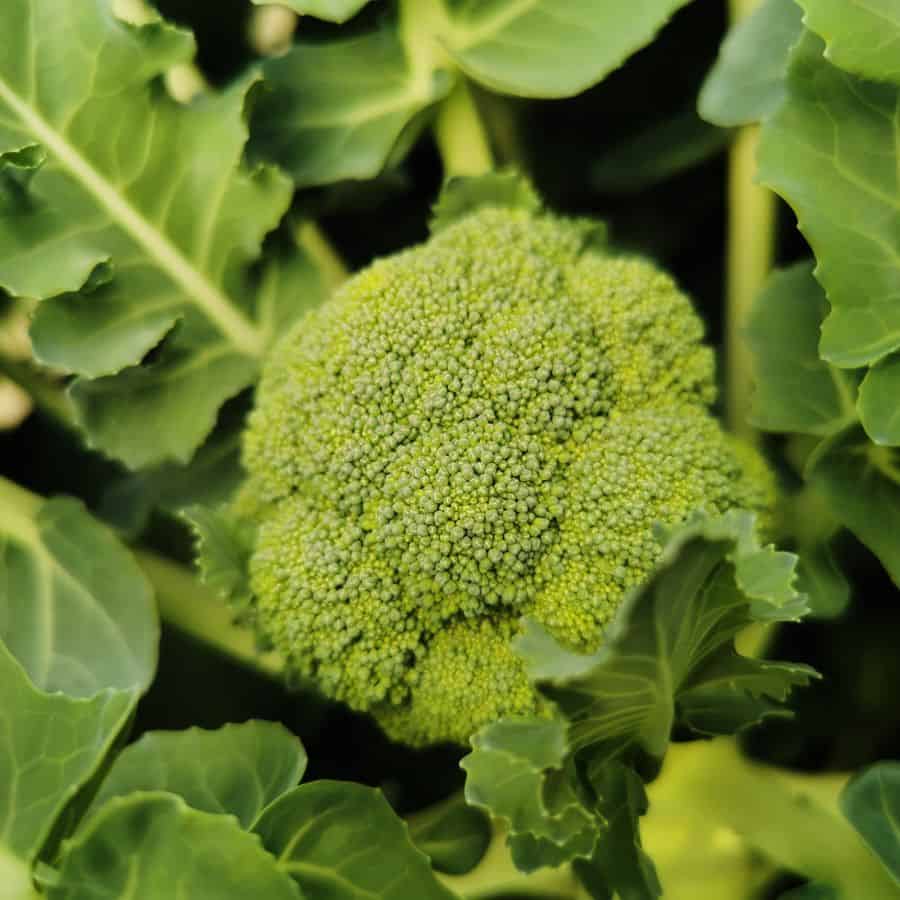
- Broccoli: These prefer cooler weather for developing tight, flavorful heads. February planting gives them that advantage.
- Cucumbers: Get these in now for an early harvest.
February isn’t an off-season for gardening. It’s a head start. Your soil may be cold, but these vegetables are adapted to handle it. If your zone has the right conditions, there’s no reason to wait.
Check your zone, pick a few vegetables from the list, and give February planting a try.