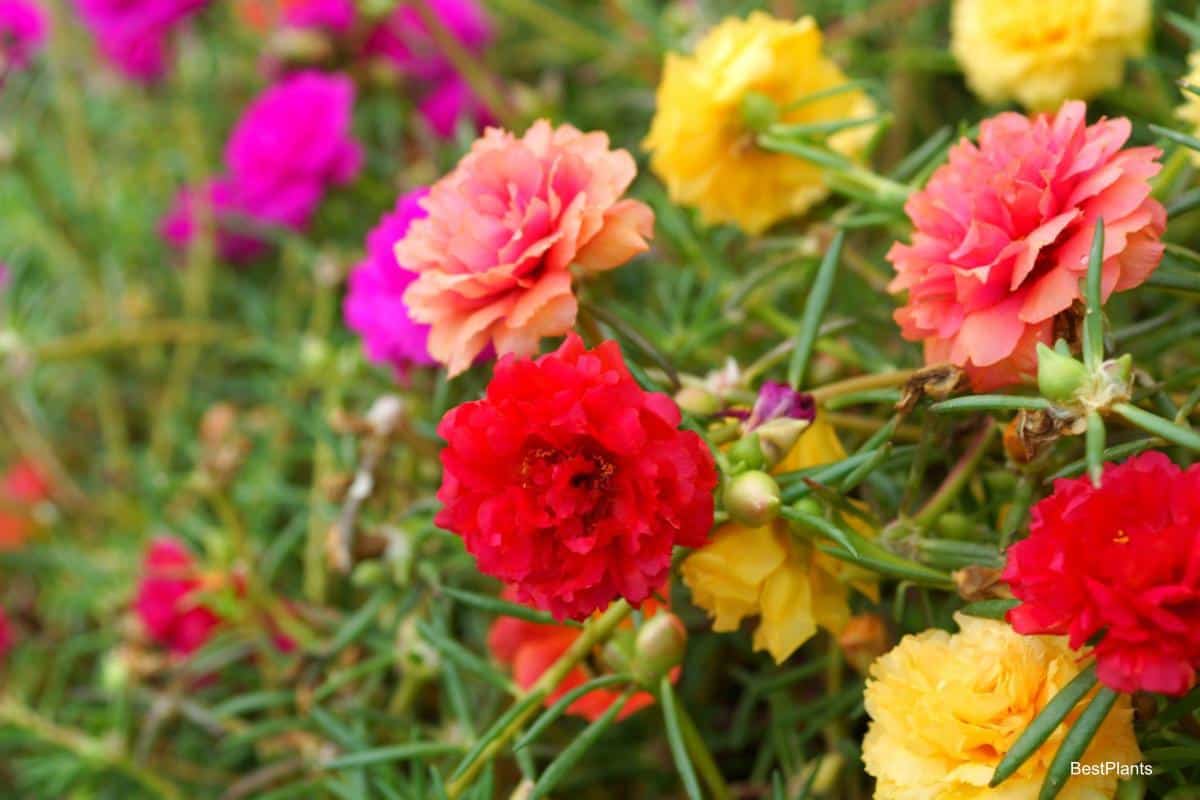
Most of us are familiar with Portulaca grandiflora, sometimes known as rose-moss.
It produces patches of red, yellow, pink, orange, or white flowers all summer in the hottest and driest places and under the most trying circumstances.
Purslane (Portulaca oleracea)
This same quality of perseverance exists in a near relative of portulaca, purslane (Portulaca oleracea), usually considered a weed in the United States.
It has juicy red stems and bronze-green leaves, which form a flat rosette.
Instead of being tolerated only as a pesky weed, purslane could be one of the most delicate and appreciated vegetables your garden produces.
For you do not have to sow and cultivate it. It just grows of its own accord, as a weed.
In Europe, it is considered one of the most wholesome and delicious green vegetables.
There, it is grown under glass in midwinter, in hotbeds and cold frames in spring, and garden beds in summer.
It is even preserved in dark green glass bottles as an early-winter delicacy.
Harvesting And Preparing Purslane
Before you pick any, make sure it is purslane. Prostrate spurge, a poisonous look-alike that can cause vomiting and diarrhea, grows in the same places. Break off a piece of stem: if milky white sap seeps out, it is spurge; purslane’s sap is clear, and its flowers are yellow, while spurge’s are whitish pink. Purslane also contains oxalates, which can be harmful if eaten in large amounts, so enjoy it in moderation, and keep pets from eating it. The ASPCA lists purslane as toxic to dogs, cats and horses.
When I harvest purslane, I cut 3- or 4-inch tips from each stem, throwing away the rest of the plant with other weeds.
Or I leave enough plants to form a row in the vegetable garden so that harvests can be made for weeks in succession.
It is easily prepared for dinner. I wash and boil it with a bit of water and salt for a few minutes, then drain and serve.
It is best to pick the stems just before dinner as with other vegetables.
44659 by Helena Rosse