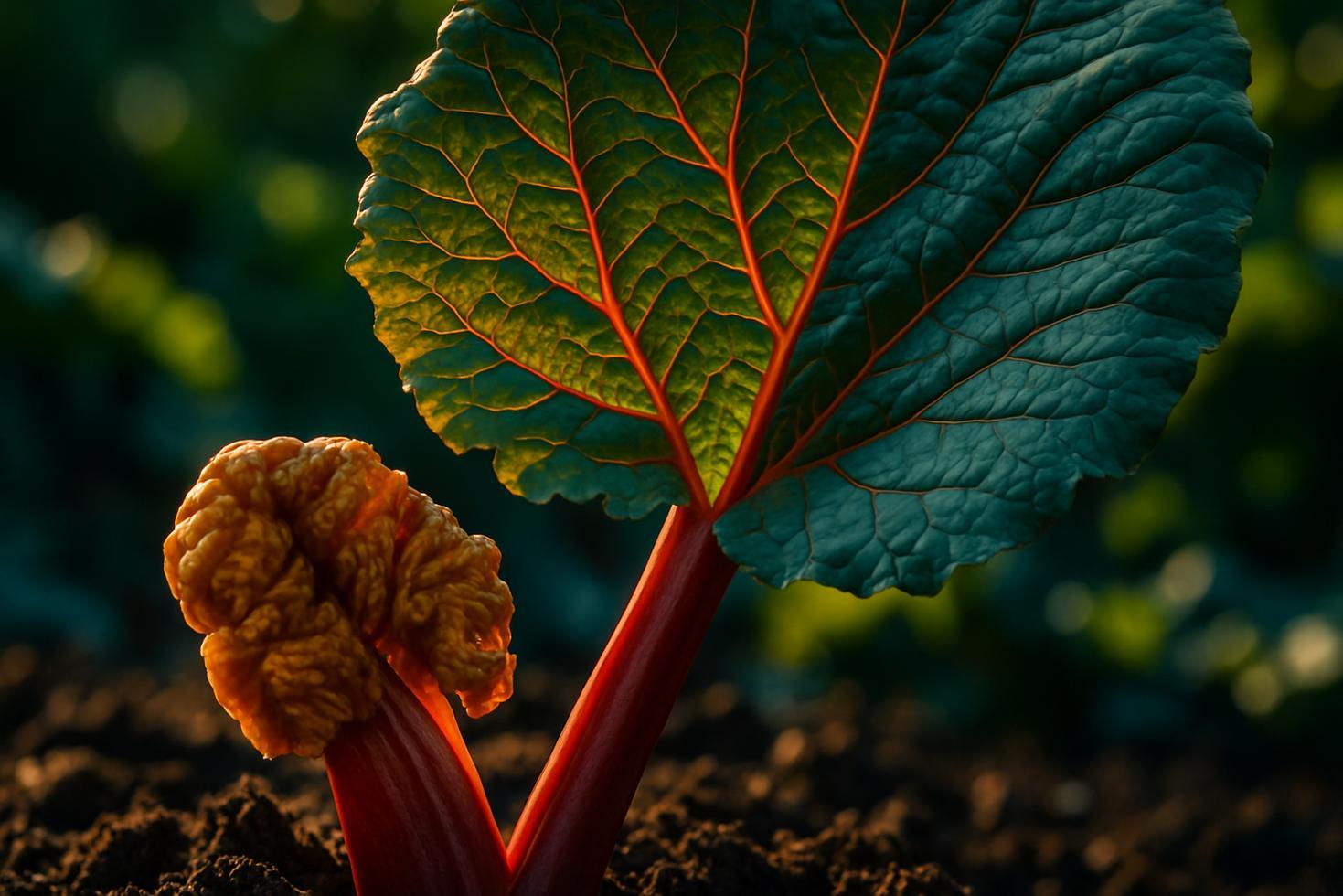
Rhubarb leaves hold around 500 mg of oxalic acid per 100 g — once absorbed, that oxalate binds circulating calcium and can precipitate as crystals in renal tissue.
Rhubarb leaves are toxic because they concentrate oxalic acid at measurably higher levels than the stalks, and once absorbed, that oxalate binds calcium directly from the bloodstream. The same root system feeds both structures. The chemistry they end up with is strikingly different.
Rhubarb overall contains 570–1,900 mg of total oxalate per 100 g across all tissues. The leaf blades push toward the upper end of that range — estimated at around 500 mg of oxalic acid per 100 g — while the stalks carry far less. That gap is the reason one ends up in a pie and the other in a compost bin.
How the Calcium-Binding Mechanism Actually Works
Soluble oxalate salts are absorbed from the gastrointestinal tract into the bloodstream. There, they bind ionized calcium, pulling it out of circulation. Falling blood calcium triggers neuromuscular misfiring — tremors, weakness, and cardiovascular stress in severe exposures.
The calcium-oxalate complex then precipitates as crystals, accumulating in renal tubules. Kidney stone formation is the documented consequence of chronic high oxalate exposure. In large acute ingestions, that crystal accumulation can progress to kidney failure, though veterinary references describe this outcome as rare even in pets.
What Toxicity Looks Like in Pets and Humans
In pets, reported signs after rhubarb leaf ingestion include drooling, vomiting, diarrhea, lethargy, tremors, and bloody urine. The Merck Veterinary Manual notes that life-threatening signs require substantial ingestion — small amounts typically cause only gastrointestinal upset.
Human poisoning from rhubarb leaves is documented but rare. Mild cases produce vomiting and diarrhea that resolve within hours. Severe cases can include muscle twitches, nausea with blood, and kidney failure. Toxicology data places the estimated lethal oxalate dose for a 70 kg adult at roughly 26.3 g of oxalate — implying approximately 2.6–5.3 kg of leaf material would be required for lethality, depending on actual oxalate concentration in the leaves consumed.
Anthraquinone Glycosides: The Second Layer of Leaf Chemistry
Oxalic acid is not the only reason rhubarb leaves are considered inedible. MedlinePlus and Purdue University identify anthraquinone glycosides as a second class of toxic compounds present in the leaves.
Scientific reviews show that anthraquinones such as emodin and rhein can cause hepatotoxicity, nephrotoxicity, and cardiotoxicity. Emodin disrupts mitochondrial membrane potential and ATP synthesis, triggering cell apoptosis. These effects are best documented in high-dose medicinal preparations, but their presence in leaf tissue adds a distinct toxicological concern beyond oxalate alone.
Rhubarb’s leaf chemistry, taken together, reflects a documented pattern across many plant species: photosynthetic tissue tends to carry higher concentrations of defensive compounds than other structures. Whether that distribution evolved specifically as a defense mechanism in rhubarb has not been confirmed in primary ecology literature. The chemistry is real; the intent is not something plants possess.
One plant, two very different outcomes. The stalk feeds. The leaf does something else entirely.
Frequently Asked Questions
Are rhubarb leaves poisonous to dogs?
Yes. Rhubarb leaves contain soluble oxalates that bind blood calcium in dogs, causing hypocalcemia; large ingestions can rarely cause acute kidney failure.
Can cooking rhubarb leaves make them safe?
No. Cooking does not neutralize oxalic acid or anthraquinone glycosides at levels that would make rhubarb leaf tissue safe to eat.
How much rhubarb leaf would be lethal to a human?
Toxicology estimates suggest roughly 2.6–5.3 kg of leaf material based on a lethal oxalate dose of approximately 26.3 g for a 70 kg adult, though smaller amounts can cause significant symptoms.
Do rhubarb stalks contain any oxalic acid?
Yes. All rhubarb tissues contain oxalic acid; the stalks simply carry far less than the leaf blades, remaining within a range the body tolerates under normal dietary conditions.