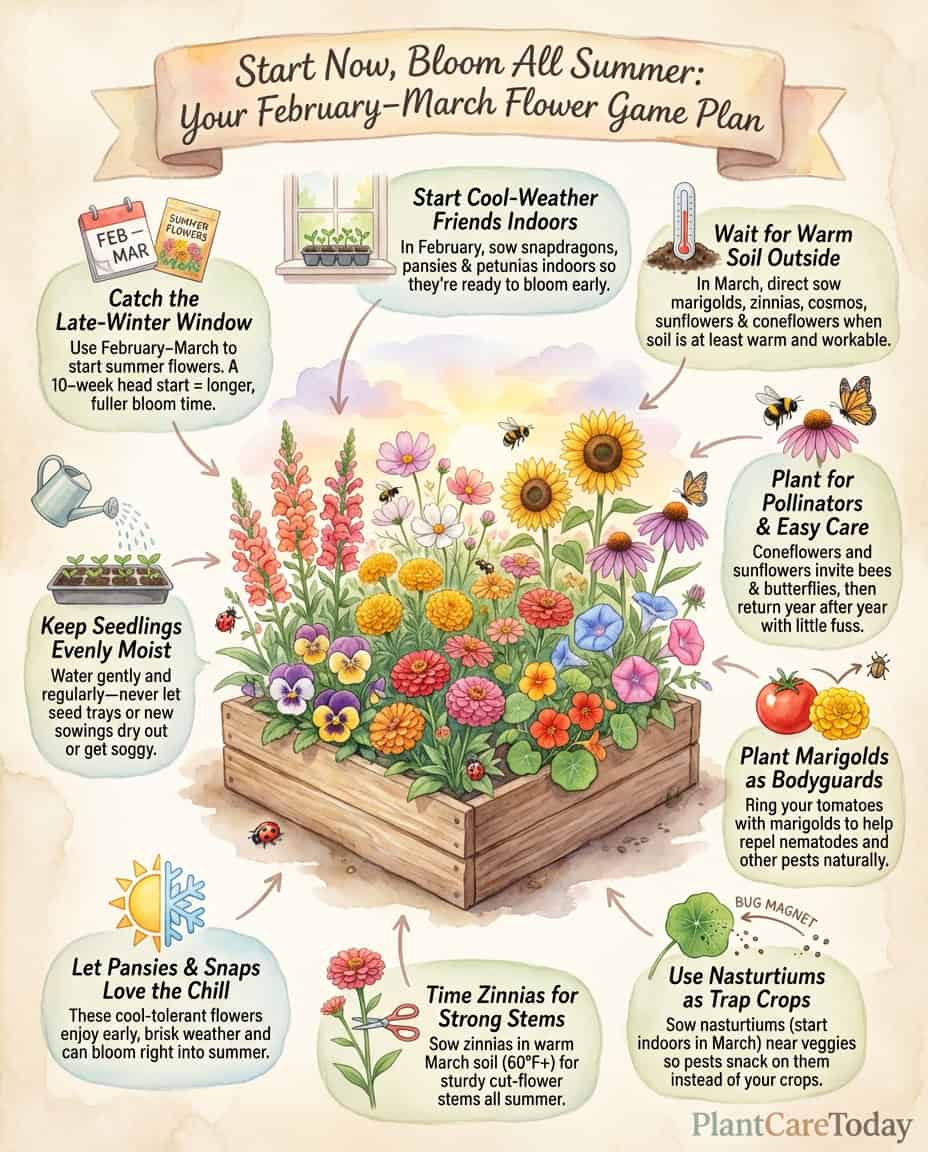
Still staring at a frozen landscape while dreaming of summer blooms? The reality is that February and March are the best months to get a head start on summer flowers.
While your neighbors wait until May to think about gardening, you can start now and get a 10-week jump on the season.
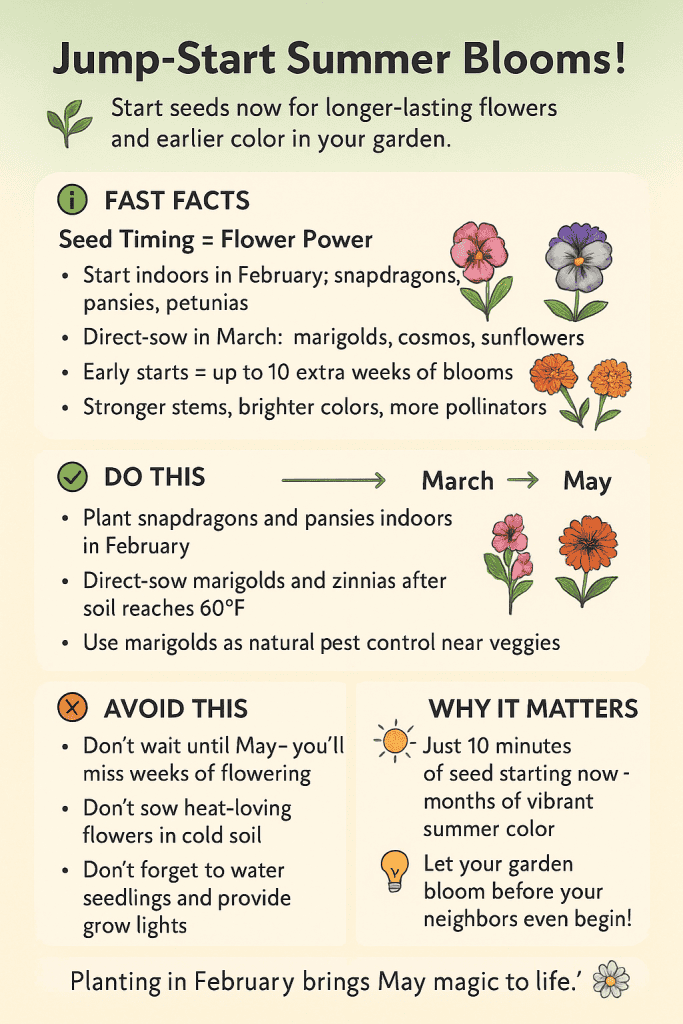
Why February & March Seeds = Summer Garden Success
Starting just 3-4 types of flowers in late winter can give you weeks of extra blooms in your summer garden. It’s a small investment now that pays off with more color later.
Most people wait until it “feels” like gardening weather, but by then they’ve missed the best window for starting some of summer’s best performers.
Your February calendar might be full of Valentine’s hearts, but it’s actually the perfect time to think about these summer flowers.

The Early-Start Flowers That Will Fill Your Summer Garden
1. Marigolds: The Garden’s Natural Bodyguards
These aren’t just basic border plants anymore. Modern marigold varieties have round, bright blooms that look really polished.
The best part is that their scent actually repels garden pests, so they work as natural pest control while looking nice.
Here’s a helpful tip: Plant marigolds around your tomatoes. They’ll keep nematodes at bay and help boost your tomato harvest.
When to start: Direct sow outdoors in mid-to-late March when the soil is workable.
2. Zinnias: The Cut Flower Champion
Think of zinnias as easier versions of roses with none of the fussiness. Their blooms come in a wide range of colors: crimson, yellow, orange, purple, and creamy white.
The real trick with zinnias isn’t about fancy fertilizers. It’s about timing.
Starting them at the right time in March gives them a growth boost, resulting in stems strong enough for great bouquets all summer long.
When to start: Sow in March once the soil warms to at least 60°F. They need heat to do well.
3. Cosmos: The Effortless Elegance Solution
If your garden needs something light and airy, cosmos delivers. Their delicate blooms hover above feathery foliage, adding a soft touch to any garden bed.
When to start: Late March direct sowing is ideal, when warm conditions and plenty of sunlight arrive.
4. Sunflowers: The Summer Skyscrapers
Sunflowers are more than just tall yellow flowers. They now come in sizes from 1-foot dwarfs to 12-foot giants, with colors ranging from chocolate brown to burgundy red. They’re reliable mood-boosters for any garden.
When to start: Late March direct sowing, after frost risk has passed.
5. Nasturtiums: The Edible Multitasker
Nasturtiums aren’t just pretty faces. These flowers do a little of everything: nice blooms, edible flowers and leaves (with a peppery kick), and natural pest management.

The difference between new and experienced gardeners is knowing that nasturtiums can be used as “trap crops,” plants that attract pests away from your vegetables.
When to start: Indoor seeding in March, transplanting once the soil warms.
6. Snapdragons: The Childhood Wonder Flowers
These upright blooms create vertical interest in any garden with their tower-like flower spikes. But their best feature?
The dragon-mouth blooms, which open and close when squeezed, make them perfect for getting kids excited about gardening.
When to start: Early to mid-February. They actually do well in cool conditions.
7. Pansies: The Cold-Weather Warriors
These cheerful flowers are the first to show up at the party. While other flowers are still dormant, pansies are already adding color to your garden.
With proper placement and regular watering, these spring favorites can keep blooming into summer, giving you nearly 5 months of continuous flowers, about twice what most gardeners get.
When to start: Indoor seeding in early to mid-February, or direct sowing in late March.
8. Petunias: The Hanging Basket Heroes
Love them or not (and I’ll admit I’ve had mixed feelings), petunias are reliable performers. Their velvety blooms create cascading color, transforming ordinary containers into something special.
The common mistake with petunias is starting them too late and missing out on the bushiest, most flower-filled plants possible.
When to start: Indoor seeding from late February to early March.
9. Coneflowers (Echinacea): The Low-Maintenance Pollinator Magnets
With their distinctive backward-curved petals and prominent cone centers, these native plants bring in butterflies and bees that help pollinate your entire garden.
Once established, coneflowers are tough. They handle drought well, don’t mind poor soil, and come back stronger year after year.
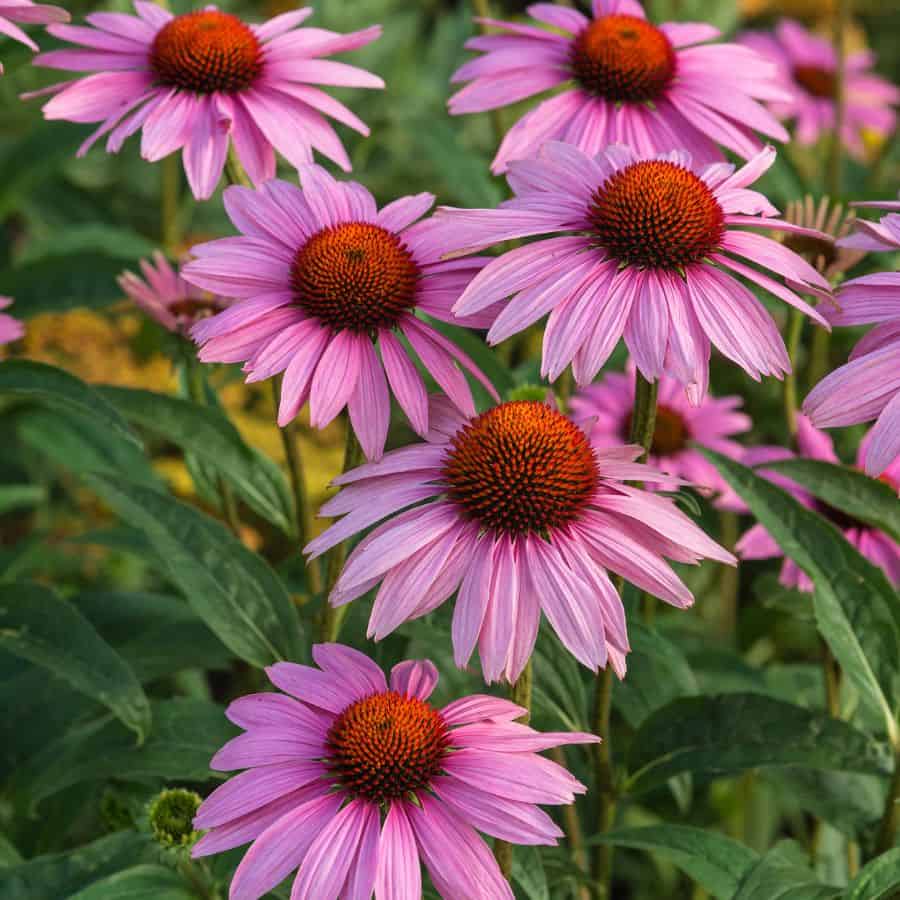
When to start: Direct sow in late March to avoid transplant stress.
Your February-March Action Plan for Summer Blooms
Here’s what to do now:
• For February (right now): Start snapdragons, pansies, and petunias indoors
• For March: Prepare for direct sowing of marigolds, zinnias, cosmos, sunflowers, and coneflowers
• Don’t forget: Seeds need consistent moisture, appropriate light, and regular checking to become healthy seedlings
Your summer garden’s success isn’t just about which flowers you choose. It’s about when you start them. While everyone else is still thinking about spring cleaning, you’ll be setting up a summer garden that looks professionally planned.
These flowers are just waiting for their moment to shine. And that moment starts now, with you, a packet of seeds, and about 10 minutes of your time today.