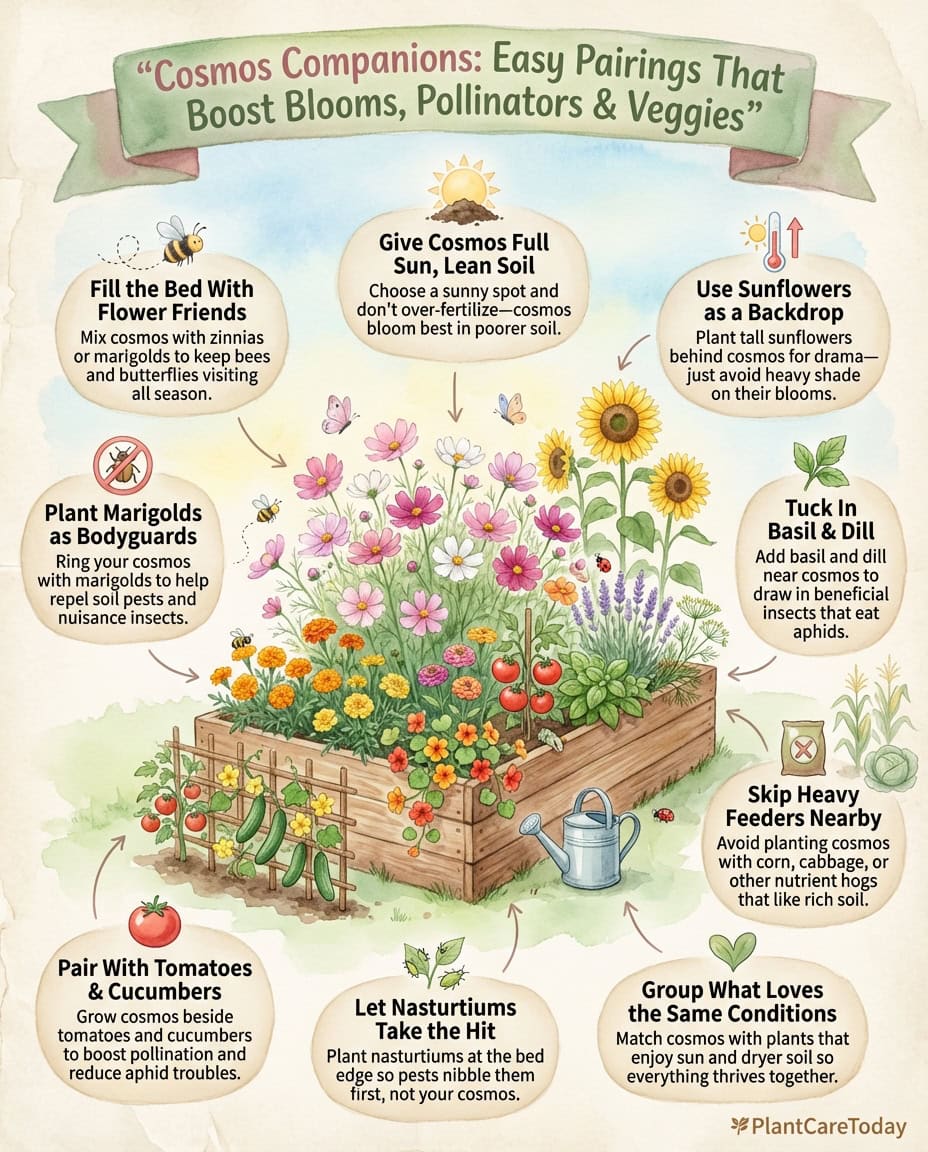
I was shocked to discover that my cosmos, which I’d always grown in splendid isolation, absolutely transformed when paired with the right garden buddies.
After my first experiment with marigolds (a game-changer suggested by my mom), I’ve become slightly obsessed with finding the perfect cosmos companions.
Ready to elevate your garden from basic to breathtaking?
These nine cosmos companions create plant partnerships more harmonious than your favorite musical duet.
Why Cosmos Are the Ultimate Wingplants in Your Garden
Forget what you’ve heard about cosmos being just another pretty face. These flower power players silently boost everything around them while looking fabulous.
They’re like that friend who makes everyone at the party feel special, working hard behind the scenes while seemingly effortless.

- Pollinator Paradise: Cosmos flowers attract bees, butterflies, and hoverflies at nearly 5 times the rate of many common garden flowers, turbocharging pollination throughout your garden.
- Pest Distraction Strategy: They act as living decoys, luring aphids and thrips away from your precious veggies like a botanical bodyguard.
- Low-Maintenance Neighbor: Unlike resource-hogging plants, cosmos thrive in poor soil and won’t steal nutrients from their companions. (Your other plants will thank you!)
9 Plant Partners That Make Cosmos Shine (And Vice Versa)
1. Zinnias (Zones 2-11)
This pairing is like the garden equivalent of a power couple. Both produce vibrant blooms all summer long, creating a non-stop pollinator party.
Together, they ensure your garden stays buzzing with beneficial insects from June through October.
2. Marigolds (Zones 2-11)
The secret most plant experts won’t tell you is that marigolds don’t just look stunning alongside cosmos. They actively protect them.
Their roots release compounds that repel harmful nematodes and other pests, while their golden blooms complement cosmos perfectly. It’s like having a beautiful security system for your garden.
3. Sunflowers (Zones 4-9)
Talk about a dramatic vertical display! This tall duo creates instant garden architecture and meadow vibes.
The structural sunflowers provide a magnificent backdrop for dancing cosmos. Just ensure taller sunflower varieties don’t cast too much shade on your sun-loving cosmos.
4. Nasturtiums (Zones 9-11, grown as annuals elsewhere)
These trailing beauties serve as sacrifice soldiers in your garden. They act as trap crops, drawing aphids away from your cosmos and nearby vegetables.

Their low-spreading habit also fills in bare spots around cosmos stems, creating a lush, multi-dimensional display.
5. Basil (Zones 10-11, grown as annuals elsewhere)
This unexpected herb pairing creates a win-win relationship. Your cosmos attracts the pollinators basil needs for robust flowering, while basil’s aromatic oils help deter mosquitoes and flies.
Plus, you’ll always have fresh herbs for the kitchen; talk about a functional garden!
6. Tomatoes (Zones 5-9)
This surprising combo is pure garden magic! Cosmos attract beneficial insects, such as hoverflies, which hunt down tomato-loving aphids and whiteflies.
In fact, gardens with cosmos planted near tomatoes report up to 30% fewer aphid problems. Your tomatoes will flourish while your cosmos add splashes of color between the vines.
7. Lavender (Zones 5-9)
This pairing creates a sensory overload in the best possible way. Both plants thrive in sunny, well-drained soil and together create an irresistible beacon for pollinators.
The lavender’s soothing scent and the cosmos’ vibrant colors will make your garden a multi-sensory experience. Just give lavender slightly more space as it prefers drier conditions.
8. Dill (Zones 2-11)
Your cosmos is trying to tell you something important: it wants a dill friend! This herb attracts beneficial predatory insects, such as lacewings and parasitic wasps, which devour aphid populations.

The feathery dill texture also creates gorgeous contrast against cosmos blooms. A pest-controlling partnership that looks absolutely stunning.
9. Cucumbers (Zones 4-12)
The game-changer for your cucumber harvest isn’t what you think. It’s cosmos! Cucumber plants rely heavily on pollinators for fruit production, and cosmos are pollinator magnets.
Studies show cucumber yields can increase by up to 25% when planted near flowers that attract pollinators. This pairing guarantees bigger harvests while adding vertical interest to your garden beds.
Plants That Make Cosmos Wilt (Literally and Figuratively)
Not all plant relationships are meant to be. Some combinations create more drama than a reality TV show. Avoid these cosmic mismatches:
- Nutrient Hogs: Corn, cabbage, and broccoli demand rich soil and can outcompete your cosmos for resources.
- Heavy Feeders: Cosmos actually struggle when overfertilized (I know, they’re wonderfully low-maintenance that way). Plants requiring frequent feeding will create soil conditions too rich for cosmos to thrive.
- Dense Shade Creators: Anything that blocks too much sunlight will leave your sun-loving cosmos stretched, pale, and desperately reaching for light.
The Perfect Match Philosophy
The difference between amateur and pro plant parents is simply this: pros know plants are like people.

They need compatible companions to truly shine. When selecting your cosmos buddies, consider both science and soul.
Choose companions that share similar growing conditions, as well as plants you genuinely love.
Remember, the most spectacular gardens reflect personal passion, not just technical perfection. Your cosmos won’t just survive with these companions.
They’ll flourish into the vibrant, pollinator-packed display your garden deserves!