Plant enthusiasts love having a range of flowering plants that bloom at different times of the year.
This is perhaps why Schlumbergera (shlum-BER-ger-uh), the so-called holiday cacti, especially the Christmas cactus, are so popular.
Christmas cactus care is easy. This succulent begins blooming between late November and early December, providing colorful flowers into early Spring.
It’s often mistaken for the Thanksgiving cactus, which is nearly identical and blooms throughout winter.
But one of the best things about this plant for its fans isn’t just the wonderful holiday flowers, which are traditionally red, but also the many other colors available.
Instead, one of the biggest draws is how easy it is to propagate this plant, so you can give them away as Christmas presents.
Christmas Cactus Plant Propagation Method
One word of warning before propagating this plant: It will take approximately 2 years for new plants to bloom.
That said, this plant is propagated exclusively through cuttings.
When to Propagate
Timing is important when propagating your Christmas cactus.
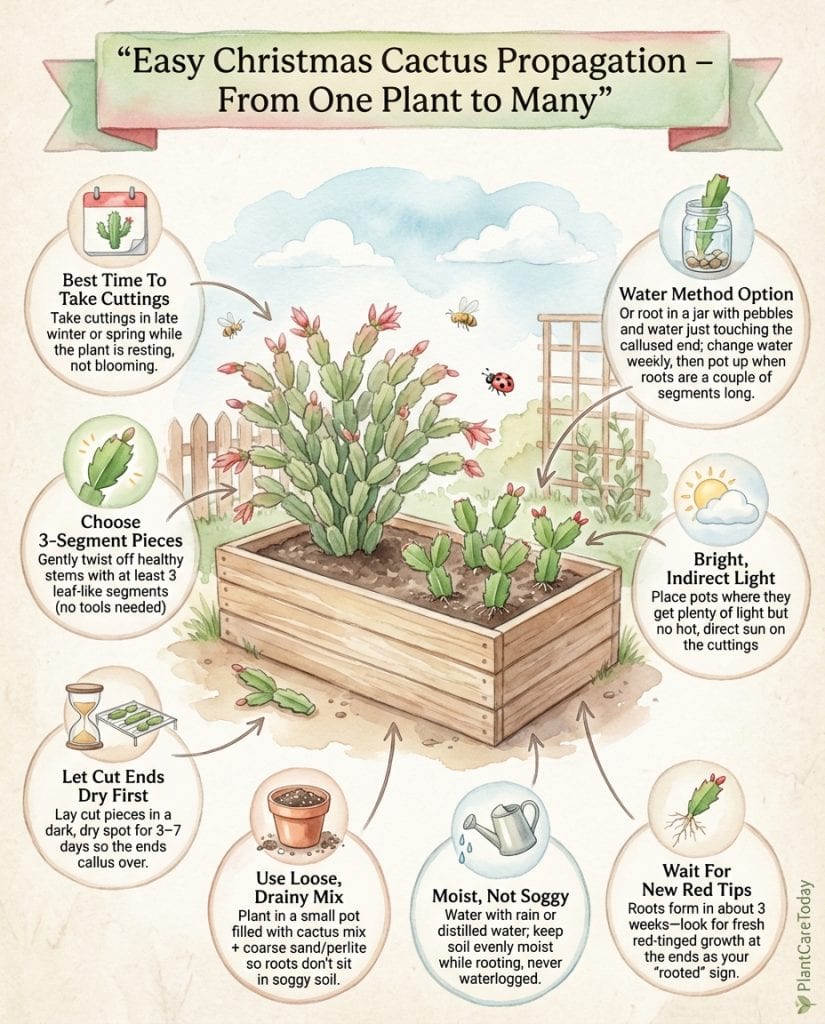
It’s possible to take your cactus cutting in late winter, right before the plant goes dormant.
However, these plants won’t wake up until May, so it’s usually best to grab your cuttings in the Spring while the plant’s still dormant.
Gathering Some Cuttings
Your Christmas cactus doesn’t have actual leaves.
Instead, it has leaf-like segments called phylloclades, making it easy to obtain stem cuttings without cutting anything.
Give your mother plant a once-over, looking for any signs of disease or infestation, and pick healthy cuttings.
You will want your “cuttings” to have at least three phylloclade segments each.
Avoid using shears, knives, or other cutting tools, as they can damage the segments and increase the risk of infection.
Instead, take hold of the lowest segment of your chosen clipping and give it a gentle yet firm 180° twist, pulling it upward.
This will result in a clean break, though there will still be a wound that needs to be addressed.
Preparing your clippings
There’s still a risk of infection or rot if you try to plant the segment as-is, so you first need to let it scab over.

Lay the cuttings out in a dark spot to dry for 3 to 7 days.
By this point, the wound should be sufficiently healed over, and you may dip the scabbed area in rooting hormone, though this is optional.
Choosing the Best Well-Draining Soil
Fill a small pot with some well-aggregated potting mix.
One of the most common mediums is a mix of 3 parts cactus and succulent potting mix with 2 parts aggregate (coarse sand, small gravel, perlite, etc.).
If you have some good organic matter on hand, such as coconut coir, compost, or peat, you can mix this with your aggregate at a 1:1 ratio.
An acidic soil pH of between 5.5 and 6.5 is generally best.
Buyer Beware!
One reason many growers prefer to mix their own soil is the risk of contaminants in cheaper commercial soils.
Companies often keep costs down by cutting corners, such as failing to sterilize the soil before packaging.
This results in bacterial and fungal spores remaining dormant in the mix until a plant is present to awaken them.
Additionally, many common pests lay eggs that will overwinter in the soil and may remain dormant or hatch into nymphs that hibernate until conditions are right.
Therefore, it’s best to choose a reputable brand, such as Miracle-Gro, which offers a cactus and succulent mix perfect for your Christmas cactus.

Planting The Healthy Cuttings
Once your calluses have formed and the new pots are ready, grab some rainwater or distilled water (AKA baby water) and give a slow pour to ensure the soil is evenly moist but not wet.
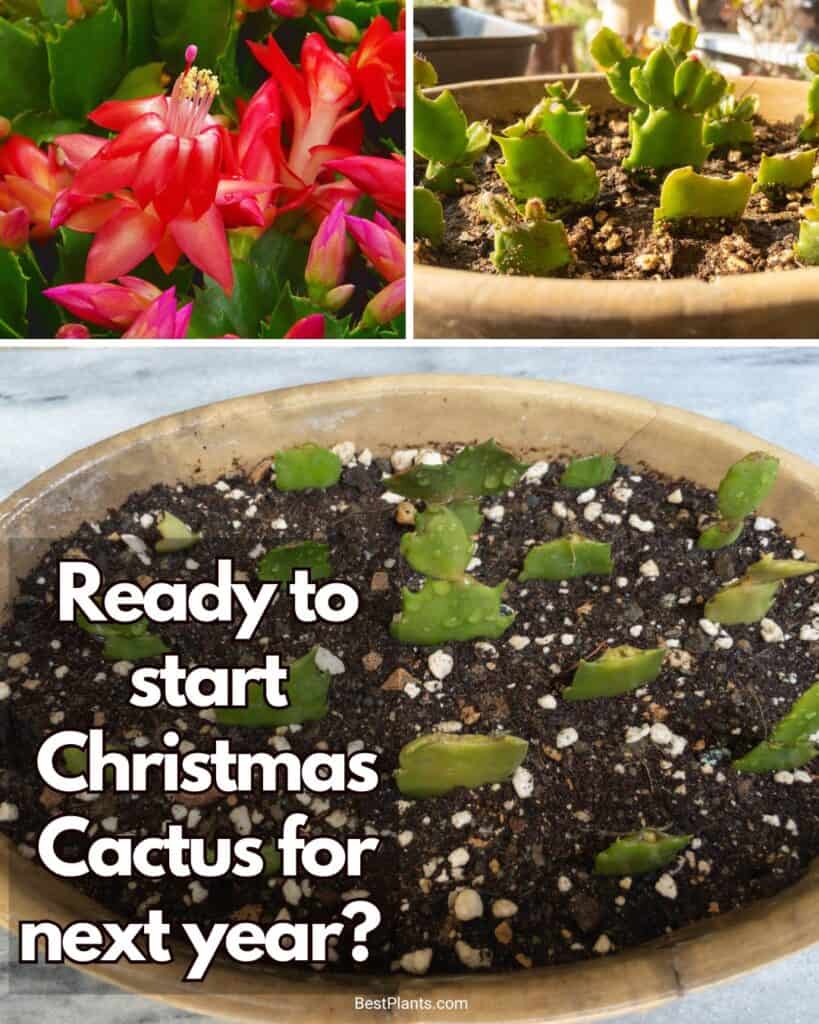
Submerge ¼ of the cutting in your pot, callus-side down, and place the pot in an area with bright, indirect light.
It takes approximately 3 weeks for your cactus to take root, and you should keep the soil moist during this time.
You will know the plant has rooted when new growth appears, with a red tinge at the tips.
Water Propagation
Yes, you heard right, Christmas cactus does indeed grow in water.
Unlike most things named “cactus,” your holiday cactus is native to tropical rainforests and loves humidity.
This means you can propagate it in water, as long as you’re careful.
To do this, grab a glass jar and fill the bottom 2 inches with pebbles or small stones, then fill with distilled water or rainwater.
Place your clipping in the jar, so only the callus is in the water.
You can use a few small sticks to act as a frame to keep the clipping suspended.
Add a little water as needed to keep the callus underwater, and change the water completely every week or so. Place the jar in a spot that gets bright, indirect sunlight (no direct sunlight) but won’t get too hot.
It will take 2 to 3 weeks for the roots to sufficiently form and several more weeks before they’re long enough to transplant.

Transplanting the Cactus
The roots of your new Christmas cactus will be fragile, and this is where many amateur growers run into an issue with water propagation.
The roots should be roughly the same length as the lower two segments of your cutting.
Create a small hole in the soil and gently lower the clipping in.
Taking care not to use too much force, slowly backfill the hole, patting it down just enough to keep the plantlet upright.
Place the pot in an area with bright, indirect light and keep the soil moist but not wet until you see new red-tinged growth appear.