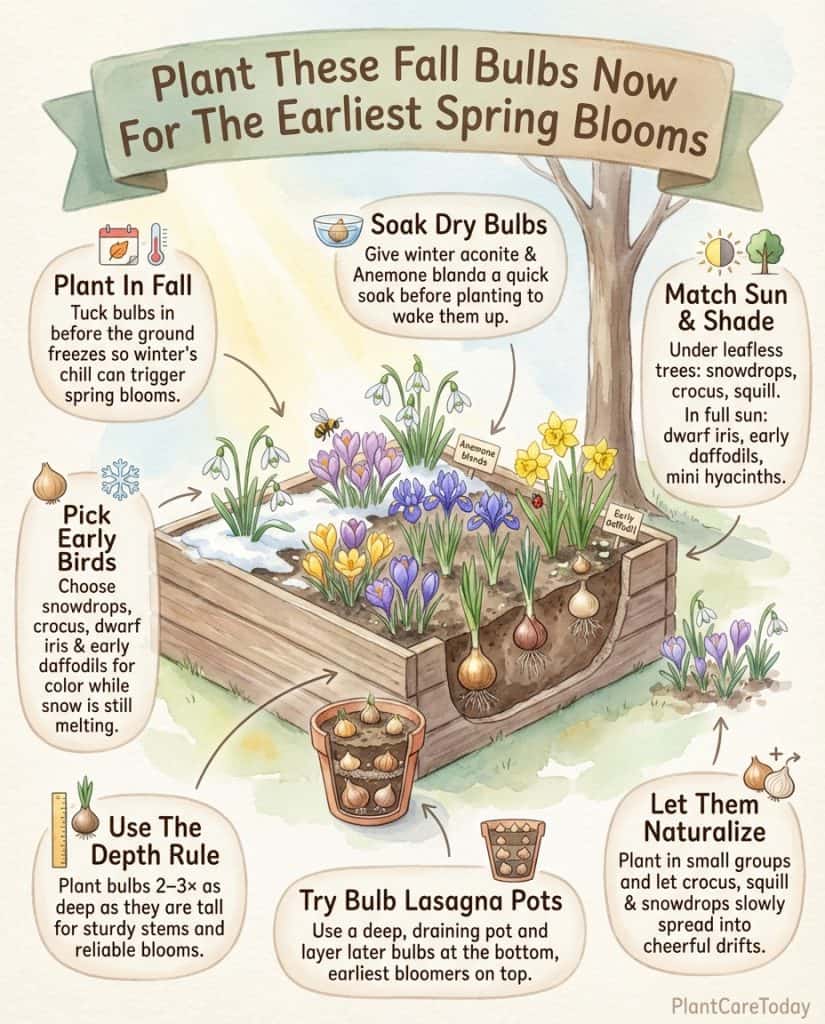
While everyone else is still staring at barren winter landscapes, your garden could be bursting with color. The secret? Planting these early-blooming bulbs this fall.
Did you know that some spring bulbs can flower even with snow still on the ground?
I was shocked to discover that certain varieties will push through frost and bloom while most plants are still fast asleep!
Why Fall Planting Creates Spring Magic
Fall planting isn’t just convenient timing. It’s essential chemistry. These specialized bulbs need winter’s chill to trigger their spectacular spring show.
Think of it as nature’s alarm clock; the cold period sets their internal timers for the perfect wake-up call.
The game-changer for your spring garden isn’t what you think… It’s not about fancy fertilizers or expensive tools. It’s about selecting the right early bloomers and getting them in the ground before winter arrives.
10 Early-Rising Bulbs That Transform Winter into Spring
1. Snowdrops (Zones 3-8): The Brave Pioneers
These delicate white droplets are the garden world’s first responders, often blooming as early as February.

Like tiny lanterns signaling winter’s end, they’ll flourish in partial shade, especially under deciduous trees where they receive winter sun and summer protection.
2. Crocus (Zones 3-8): The Snow Dancers
Ever seen flowers blooming during an active snowfall? That’s the crocus for you; nature’s ultimate optimist!
‘Tommy’ crocuses (Crocus tommasinianus) are particularly excellent at naturalizing, creating a wild tapestry of purples, whites, and yellows by early March.
3. Dwarf Iris (Zones 4-8): Petite but Powerful
Don’t let their small size fool you. These vibrant bloomers pack a colorful punch in early spring.
Unlike their shade-loving cousins, these dwarf varieties crave sunshine and well-draining soil to perform their magic.
4. Glory-of-the-Snow (Zones 3-8): True to Their Name
These early risers live up to their poetic name, often blooming while snow patches still dot your landscape.
Their vibrant blue and pink stars create a celestial carpet that’s perfect for lawns, driveways, and even hanging baskets.
5. Winter Aconite (Zones 3-7): Sunshine in Flower Form
These golden cup-shaped blooms appear just as winter loses its grip. Here’s a pro tip most gardeners miss: soak these exceptionally dry bulbs before planting to jump-start their growth cycle.
They’ll reward you with early sunny faces that seem to glow against late winter’s dreary backdrop.
6. Early Daffodil Varieties (Zones 3-8): The Reliable Classics
Varieties like ‘February Gold’ and ‘Rijnveld’s Early Sensation’ are the overachievers of the daffodil world.
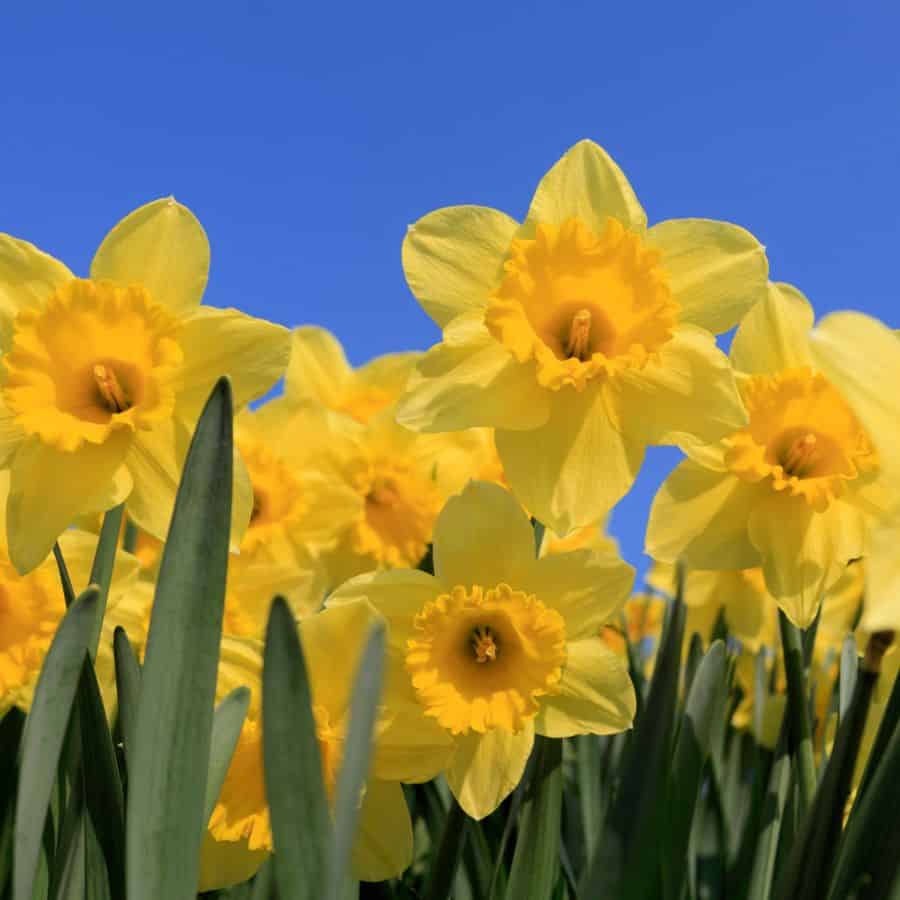
These yellow trumpets announce spring with unmatched enthusiasm while being completely deer-resistant.
Plant them deep in spots that balance sun and light shade; too much shade and they’ll skip the flowering party.
7. Siberian Squill (Zones 2-8): The Arctic Survivors
With true-blue flowers that seem to capture pieces of sky, these tough little bulbs can withstand cold that would make polar bears shiver!
Zone 2 hardy (that’s -50°F!), they’ll naturalize beautifully under trees where many other plants struggle.
8. Striped Squill (Zones 4-8): Nature’s Pinstripes
These elegant blue-and-white striped blooms look like they’re dressed for a garden gala.
Perfect for rock gardens or border edges, they maintain a tidy, compact habit that never needs haircuts. Plant these dapper flowers at least 3 inches deep in well-drained soil for best results.
9. Dwarf Hyacinth (Zones 4-8): Fragrance Factories
Forget what you’ve heard about waiting for hyacinth blooms! Dwarf varieties like ‘Blue Pearl’ don’t just stay tidier than their taller relatives.

They bloom up to three weeks earlier. These fragrance powerhouses are like nature’s perfume diffusers, filling your garden with sweet scent when most plants are still hitting the snooze button.
10. Anemone Blanda (Zones 5-8): The Daisy Doppelgangers
These daisy-like blooms in pink, blue, purple, and white create a mid-spring kaleidoscope effect.
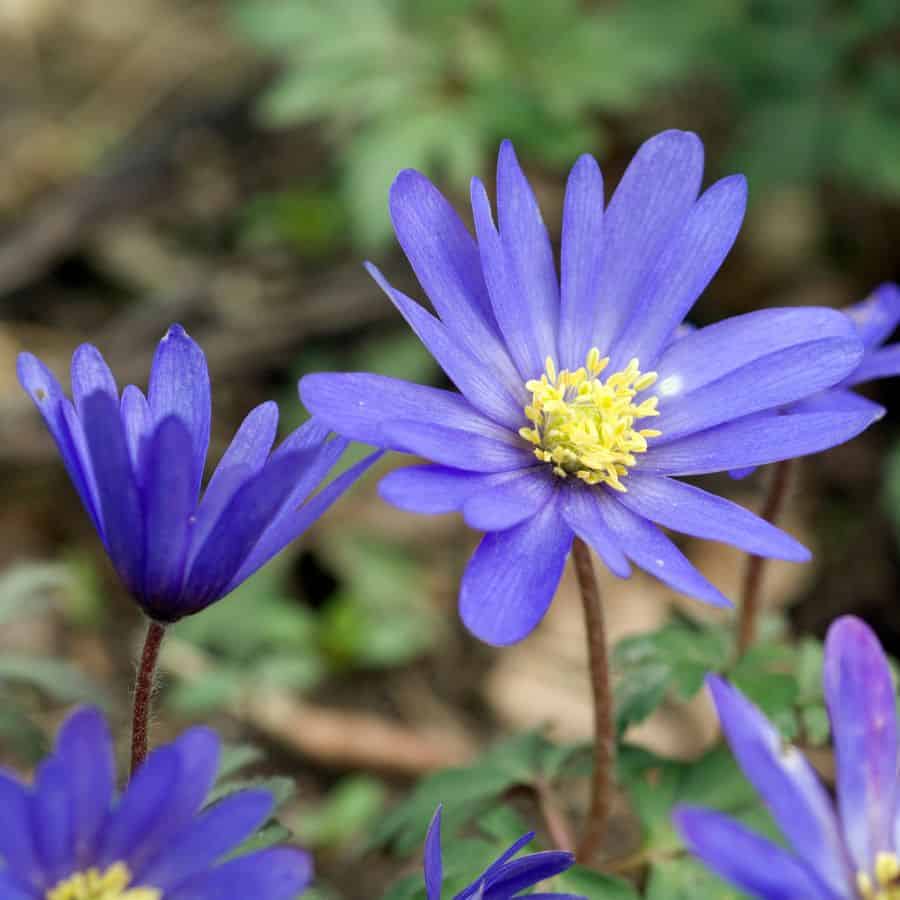
The difference between amateur and pro plant parents is simply knowing to soak these tubers before planting. This one step dramatically improves their performance.
Container Planting: Yes, You Can!
Your plant babies are trying to tell you something important: “We can grow in pots too!” While these bulbs create stunning open landscapes, containers work beautifully with a few adjustments:
- Size matters – Choose pots with room for root development
- Drainage is critical – Bulbs hate wet feet more than we hate wet socks
- Layer different bulbs – Create a “bulb lasagna” with early bloomers on top, later varieties below
(And between us? Container planting means you can move these beauties to wherever they’ll show off best once they bloom!)
The Depth Deception: How Deep to Plant
The secret most plant experts won’t tell you is that depth matters more than you think. Plant too shallow and you’ll get weak stems and poor flowering. Too deep and they might not emerge at all!
Follow this simple rule: Plant bulbs 2-3 times as deep as the bulb is tall. For example, a 2-inch bulb needs a hole 4-6 inches deep.
Think of it like tucking them in with just the right amount of blanket; not too much, not too little.
Why This Fall Planting Revolution Matters
After the bleakness of winter, these early bloomers don’t just add color. They restore hope.
They’re garden heroes, pushing through frozen ground to remind us that renewal is coming. And isn’t that worth a few hours of fall planting?
The most vibrant spring gardens aren’t created in April. They’re planted in October and November.
While your neighbors are still hibernating, you’ll be enjoying the first spectacular show of the season, a reward that feels almost magical after winter’s long slumber.
So grab your trowel before the ground freezes. Your future self will thank you when that first snowdrop pushes through February frost, like a tiny white flag signaling winter’s surrender.