
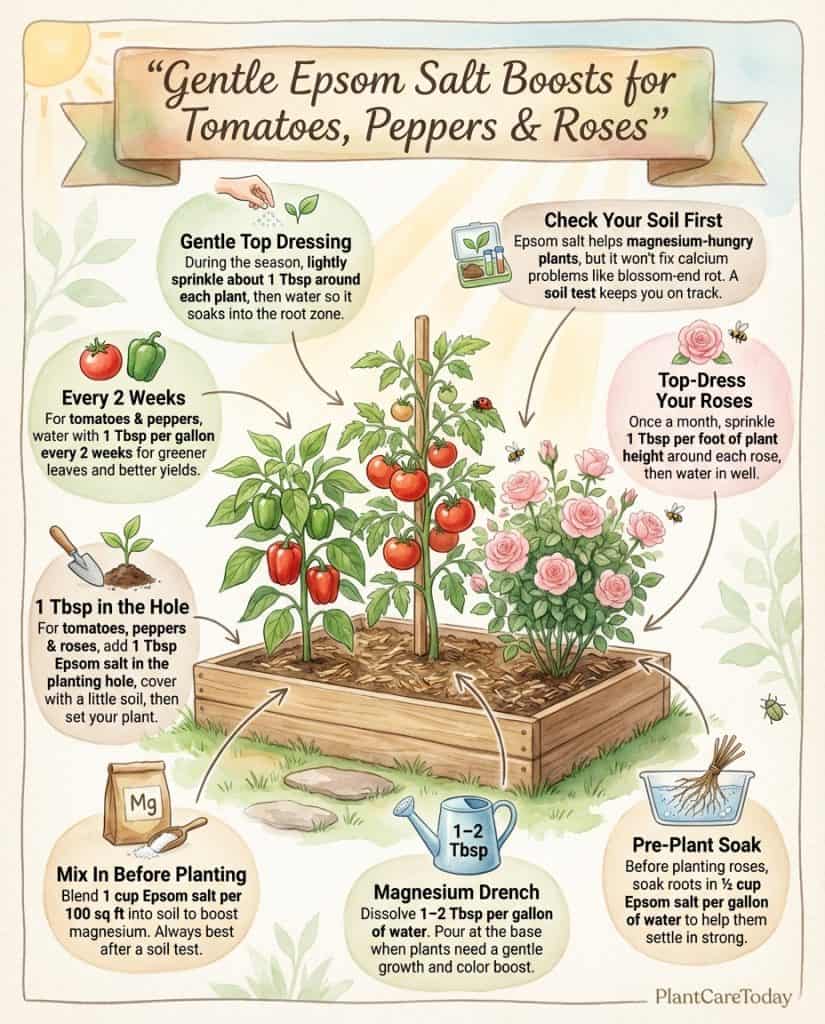
Is Epsom salt good for plants? There are many reasons to use Epsom salts (magnesium sulfate) in the garden.
It contains magnesium, one of the “major minor” elements. Plants need magnesium to grow, produce fruit, and perform well.
Here are a few of the reasons to use Epsom salt for plants:
- The magnesium sulfate (Epsom Salt) helps speed up plant growth
- Increase a plant’s nutrient uptake, deter pests, increase
- Deter pests
- Increase the flavor of fruit and veggies
- Increase the output of vegetation
- Improve overall plant health.
Read on to discover “other” ways to use Epsom salts in your garden.
Before we look at the big three plants most gardeners use Epsom Salt on with wonderful results: Tomatoes, Peppers, and Roses, let’s look at some general application practices and rates you can use with many plants.
Applying Epsom Salt
Below you’ll find basic methods and rates for applying an Epsom salt solution to plants and soil.
NOTE: It is always advisable to have a soil test conducted before applying any nutrients.
Soil Incorporation: Broadcast 1 cup of magnesium sulfate per 100 square feet, then mix it into the soil before planting.
At Planting Time: When planting seedlings or new plants, dig a hole, place about 1 tablespoon of Epsom salts at the bottom, cover with a thin layer of soil, place the plant in the hole, and finish planting.
Pre-Planting Soak: Prior to planting, soak root balls in 1/2 cup of Epsom salt diluted in one gallon of water.
Top Dressing: During the growing season, sprinkle about a 1 tablespoon directly around the base of the plant and water it in.
Applying in Liquid Form or Drenching: Drenching plants with magnesium sulfate improves overall health by providing a sufficient magnesium dose.
If your plants need a boost, dissolve about one to two tablespoons of Epsom salt in a gallon of water.
Pour water at the base of the plant and allow the water-salt solution to soak into the soil. Repeat throughout the season as necessary.
NOTE: We cannot overstate the importance of a soil test before adding anything to your soil to “fix” a deficiency, such as magnesium.
Epsom Salt For Tomatoes
A healthy, growing tomato plant requires significant magnesium during growth and production.
Maintaining magnesium at appropriate levels can be achieved through regular Epsom salt applications.
The results: more blooms, fewer blossom-end rot, more fruit, stronger plants, deeper green color, and tastier, sweeter tomatoes.
Maintaining magnesium at appropriate levels can be achieved through regular Epsom salt applications.
The results: more blooms, fewer blossom-end rot, more fruit, stronger plants, deeper green color, and tastier, sweeter tomatoes.

This results in more blooms, less blossom-end rot, more fruit, stronger plants, deeper green color, along with tastier, sweeter tomatoes.
Sweeter Tomatoes: Plants lacking adequate magnesium may also lack sweetness, making
Epsom salts are a cost-effective source of magnesium. It is readily absorbed by the plant. Use the liquid application below…
Planting Tomato Seedlings: When planting new plants, dig a hole, place about 1 tablespoon of Epsom salt at the bottom, cover with a thin layer of soil, and plant the tomato seedling.
Liquid Applications: Every two weeks, mix 1 tablespoon in a gallon of water and water the plants with the solution. Mixing with warm water helps dissolve Epsom salt more easily.
By following the above “recipe,” many gardeners report excellent results and good-sized, tasty fruit. Try It!
Note: Epsom salt is not a cure for blossom end rot, despite some recommendations. Calcium is typically associated with blossom-end rot, not magnesium deficiency.
Peppers Love Epsom Salt
Growing pepper plants is much like growing tomatoes; they are traditionally magnesium-deficient.
Applying Epson Salt to peppers is beneficial for growth, germination, yield, appearance, and overall strength.
Peppers need sufficient magnesium levels for robust growth. As soils grow, magnesium is depleted. Adding Epsom salt helps restore these essential minerals, enabling plants to absorb more nutrients and build stronger cell walls.
Follow Tomato Recommendations – Follow the same application rates and recommendations for tomatoes when planting and weekly maintenance.
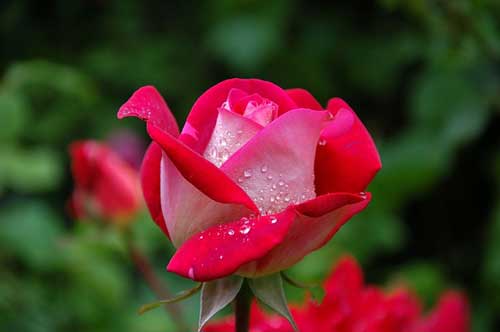
Epson Salt For Roses
Rose enthusiasts cheer the results Epsom salts deliver to their roses. More vibrant blooms, richer color, darker green foliage, and stronger plants.
Regular applications increase magnesium levels in leaves, which are vital for chlorophyll production and seed germination. It also strengthens cell walls and improves the plants’ uptake of sulfur, nitrogen, and phosphorus.
Planting Roses – When planting roses, soak the roots in 1/2 cup of Epsom salt diluted in one gallon of water. When you are ready to plant the bush in the ground or a pot, sprinkle about 1 tablespoon of Epsom salt into the hole before planting, then cover with a thin layer of soil.
Top Dressing – Once per month during the growing season, sprinkle about a 1 tablespoon per foot of plant height Epsom salt directly around the base of the plant and water it in.
Using Epsom Salt For Gardening & Landscape
Epsom Salt is highly recommended by expert growers for use on vegetables and in the landscape.
It is fairly safe, inexpensive, and the benefits of adding it to the soil to improve plants are well worth the cost.
It has been used in gardens for hundreds of years as a “natural fertilizer”. When sprayed or diluted and used as a drench liquid, it is much more quickly “available” for use by plants.
Better Flowering, More & Stronger Blooms – Although there is no “firm” scientific study to back the claim, many seasoned gardeners swear that the addition of Epsom salt to their flower garden plants greatly improves the plant health, color, and textures of the flowers they grow.
Plants are stronger and produce more blooms. Incorporate Epsom salts into the soil at planting, and use them as a liquid foliar spray every 2 to 3 weeks.
Azaleas & Rhododendron – Helps produce more flowers and helps plants from turning “yellow” from sulfate deficiency. Apply 1 tablespoon per 9 square feet over the root zone every 2-4 weeks.
Fruit Trees – Producing fruit is a long process for a tree. Magnesium levels often drop during this “long season,” and applications of Epsom salt can be highly beneficial.
Stronger plant growth, improved photosynthesis, fruit can taste better, look more attractive, be more nutritious, and be more weather and disease-resistant. Apply 2 tablespoons per 9 square feet over the root zone 3 times per year.
Lawn & Grass – Epsom salts can help with germination and support healthy seed growth in the early stages. The minerals in Epsom salts can help grass look healthier and greener, and support stronger root growth to withstand environmental effects.
For every 1250 square feet of grass, apply 3 pounds with a spreader, or dilute in water and apply with a sprayer. This is NOT a complete fertilizer for grass.
Counter Transplant Shock: When moving plants from one location to another, or from pots to the ground, roots can be damaged, leading to transplant shock.
Epsom salts will help with chlorophyll production and improve nutrient uptake of fertilization, giving plants a big helping hand to make the plants adaption to their new environment much easier.
After planting water plants with a solution of 1 gallon of water mixed with 1 tablespoon of Epsom salts.
Prevent Leaf Curling – When plants are lacking in magnesium, they may show symptoms of deficiency with leaf curling. Add Epson salt to the soil by sprinkling and watering it in, or dissolve 1 tablespoon in 1 gallon of water and thoroughly drench the soil.
Yellow Leaves – Yellow, dull-looking leaves often indicate the plant is lacking essential nutrients, such as magnesium or sulfur. Apply Epsom salt (magnesium sulfate) by adding it to the soil-based fertilizer once per month.
For a more direct approach, mix 1 tablespoon in a gallon of water and apply it as a foliar spray to the leaves. Be patient; different plants respond to applications at different rates.
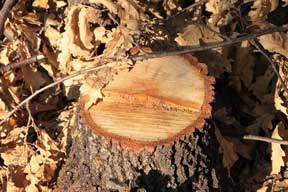
Tree Stump Removal – Epsom salts are known for their absorption properties. It can suck water out of wood, making it easier to remove a tree stump. To remove a tree stump using Epsom salts, drill multiple holes in the top of the stump.
These holes must be approximately three to four inches apart. When there is no more room to drill, pour salt into the holes and then add water. Pour Epsom salts onto any exposed roots to dry them out.
You may not be successful the first time and may have to repeat the process every three weeks until the stump dies and can be removed.
Plants and Epsom Salts
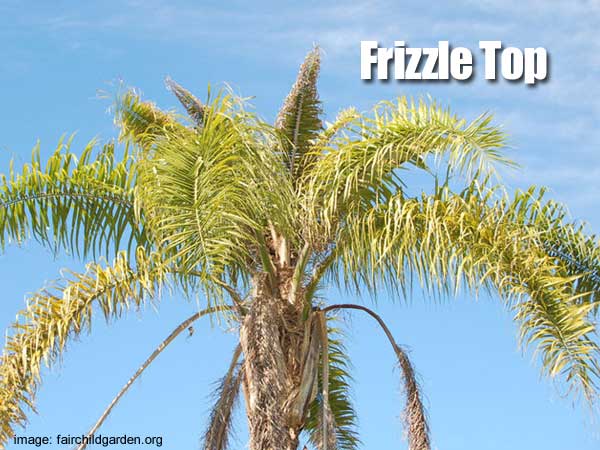
Palm Trees “Frizzle Top” – landscape palm trees with magnesium deficiency develop a condition growers call “frizzle top.” It is where the tops of the leaves look like they have had a bad hair day, and the tops are usually yellow or light green.
Apply Epsom salts around the base, and drench/spray the leaves and crown with a liquid mixture of 1 tablespoon of Epsom salts per 1 gallon of water.
Cycads – Epson Salts are an ideal supplement for use on cycads with yellowing leaves. A soil application and a drench should be used, as cycads are slow-growing. Mix 1 teaspoon with 1 gallon of water, then apply during watering.
Ferns: Epsom salts work wonders as a liquid fertilizer, helping leaves achieve a rich, deep, dark green color.
Elephant ear plants also benefit from additional magnesium. Apply as a drench by mixing 1 tablespoon of Epsom salts to 1 gallon of water.
Yellowing Bougainvillea and Gardenia Leaves & Chlorosis – Bougainvillea and Gardenia are beautiful and fairly low-maintenance plants.
But heavy flowering, or the soil pH being off, can drain magnesium levels down, and yellow foliage can appear… Epsom Salt to the rescue. Sprinkle about 1/2 cup at the base of the plant (in the ground) and use a foliar feed spray mixing 1 tablespoon per gallon of water.
Related: Why Do Gardenia Plants Get Yellow Leaves?
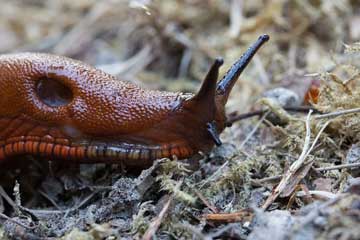
Pest Control: Epsom Salts can be used in many instances to provide a natural, pesticide-free cure for crawling, slimy slugs. Sprinkle where slugs glide along and say good-bye. Epsom salts are also kid-friendly, as they are non-toxic.
Weed killer: Use Epsom Salts as a weed killer by mixing 2 cups of Epsom salts with 1 gallon of vinegar. Add liquid dish soap to the mixture and transfer it to a spray bottle.
Then just spray the weeds while avoiding your flowers and other plants. This should effectively control weeds without damaging the plants you want to protect.
Removing a Splinter: While working in the garden, you may pick up a splinter while grabbing a tool handle or tree branches. They can be irritating, painful, and very hard to remove.
Try this… soak the affected area in 2 tbsp of Epsom salts in a cup of water. This will increase the skin’s osmotic pressure and help draw the splinter out on its own.