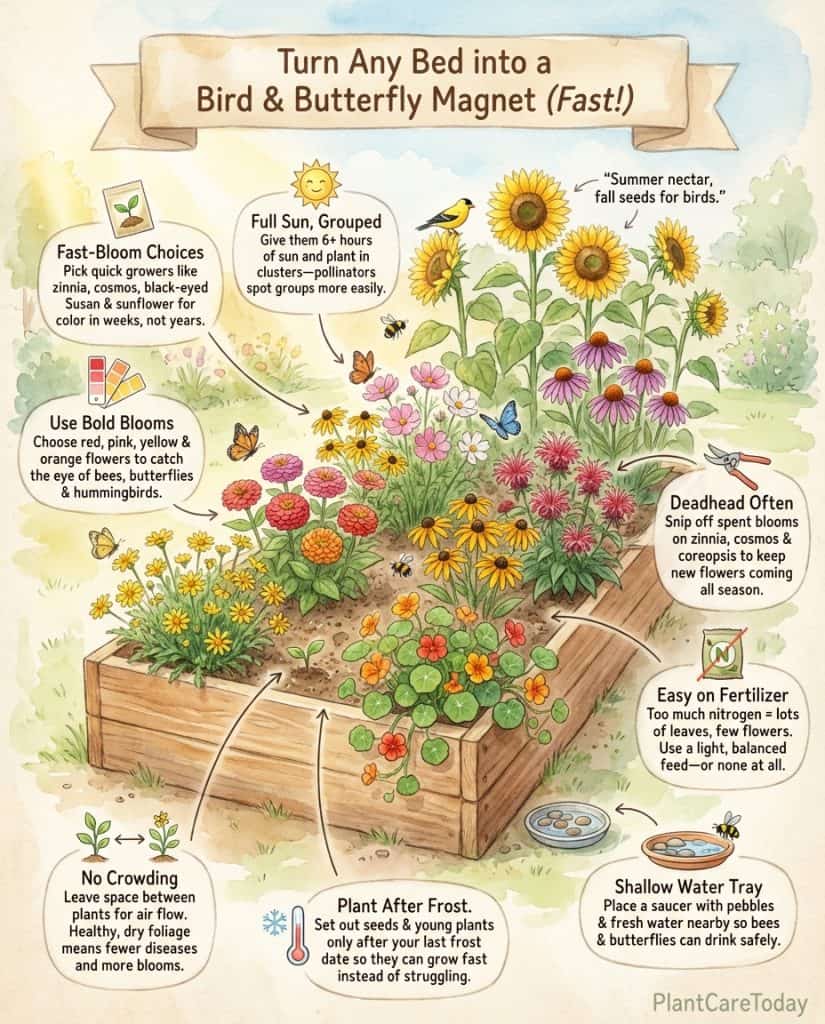
Is your garden looking more like a ghost town than a wildlife sanctuary? You don’t need to spend a fortune on fancy feeders or wait years for plants to mature.
The real trick is choosing the right flowers that can transform your space into a pollinator paradise in just weeks.
And I’m not talking about complicated varieties that require a master gardener’s touch. These are easy-growing flowers that butterflies and birds can’t resist.
Why Your Garden Needs These Pollinator Magnets
Did you know that pollinator populations have declined by up to 40% in recent years?
Your garden isn’t just a pretty space. It’s a potential habitat that can help reverse this trend while giving you front-row seats to nature’s show.
Think of these fast-growing flowers as the garden equivalent of throwing a party. The right blooms don’t just invite pollinators; they also attract them. They serve up a nectar buffet that keeps them coming back for more.
The Speed-Bloom Selection Strategy
Before diving into specific flowers, let’s strategize your selections. The best part about a pollinator garden is that it’s actually about timing and color, not just plant variety.
• Go annual for instant results: Annuals and short-lived perennials give you the quickest blooming results
• Think bright and bold: Choose flowers in red, pink, yellow, or orange (pollinators see these colors easily)
• Deadhead regularly: Removing spent blooms is like resetting the buffet table for your flying visitors
The 8 Best Fast-Growing Flowers for Pollinators
1. Zinnia: The 6-Week Wonder
If patience isn’t your virtue, zinnias are your new best friend. These bright blooms show up in just 6-8 weeks and are butterfly magnets. Their round, colorful faces are like landing pads explicitly designed for pollinators.
Zinnias are basically the fast food of the flower world. Quick, satisfying, and impossible for pollinators to resist.
Pro tip: Deadhead spent zinnia blooms regularly, and they’ll reward you with a non-stop flower show until frost.
2. Cosmos: The Drought-Defying Beauty
Forget what you’ve heard about needing perfect soil for lovely flowers. Cosmos actually prefer poor, lean soil and will bloom in just 7-9 weeks. Their feathery foliage and bright blooms create a butterfly playground.
The trick: The less you fuss over cosmos, the better they bloom. Seriously. Please put them in your garden’s most neglected corner and watch them do their thing.
3. Black-Eyed Susan: The Two-for-One Special
These sunshine-yellow bloomers do a little of everything. Butterflies flock to their bright petals during summer, while birds swoop in for the seed buffet in fall. And all this action starts just 6-8 weeks after planting.
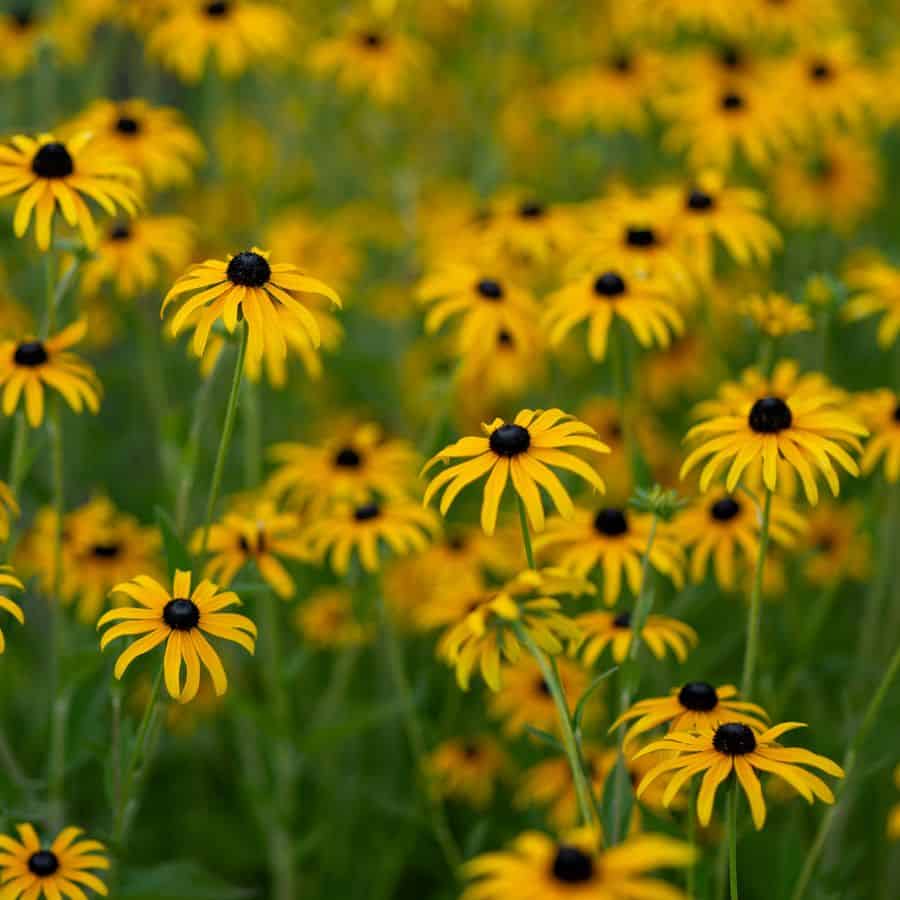
They’re like the overachievers of the garden world, thriving in poor soil, drought conditions, and full sun without complaint.
4. Sunflower: The Vertical Show-Stopper
Sunflowers can grow up to 6 inches per week in good conditions. These towering beauties offer a dramatic vertical element while serving as pollinator skyscrapers.
Butterflies visit early in the season, and birds (especially finches) go wild for the seeds later on. It’s like planting a two-phase wildlife restaurant.
5. Nasturtium: The Edible Attractor
These trailing beauties grow so quickly that they can cover bare spots in weeks. Their lily-pad-like leaves and fiery-colored trumpet flowers create a cascading pollinator paradise.
Bonus: Both the flowers and leaves are edible for humans, too, with a peppery kick that makes for interesting salads. How many flowers can claim to feed butterflies and your dinner guests?
6. Coreopsis: The Resilient Repeater
Starting the bloom party in just 8-10 weeks from seed, coreopsis delivers daisy-like flowers that pollinators find irresistible. These tough blooms handle heat, drought, and poor soil without issue.
The key: Trim spent blooms, and they’ll keep the flowers coming all season long.
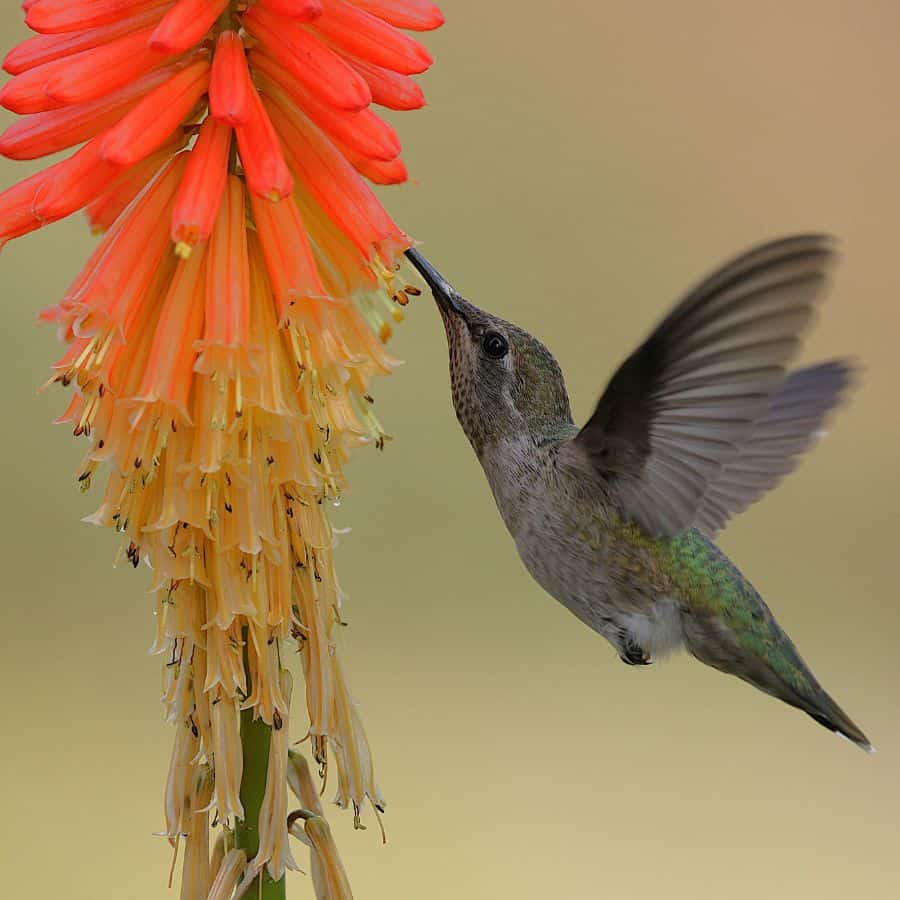
7. Bee Balm: The Hummingbird’s Dream
While not the speediest from seed, young bee balm transplants deliver rapid results with their unique, shaggy blooms. Hummingbirds are particularly drawn to their tubular flowers.
Their fragrant foliage is just a bonus. Crush a leaf between your fingers and enjoy the citrusy-minty scent that deer and rabbits tend to avoid (but you’ll love).
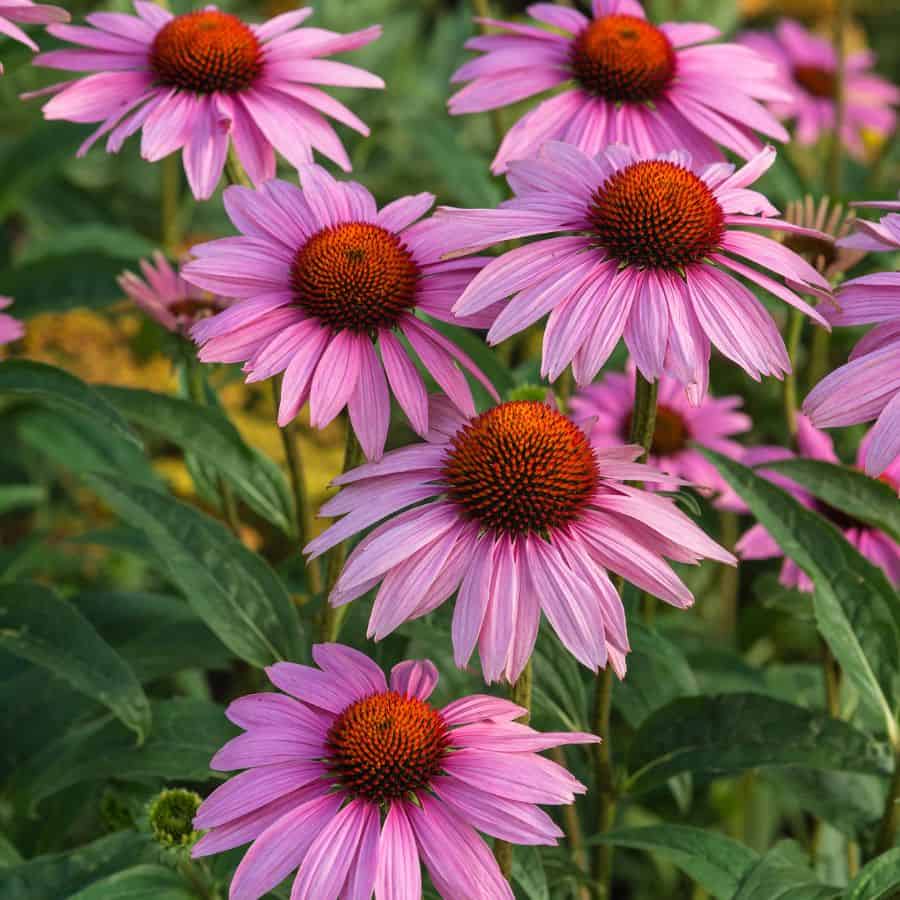
8. Coneflower: The Perennial Powerhouse
While most perennials make you wait until year two for flowers, coneflowers break the rules by blooming in their first season. Their distinctive cone-shaped centers surrounded by drooping petals are butterfly beacons.
The difference between new and experienced gardeners is knowing that, for the fastest results, start with small plants rather than seeds.
Avoid These Common Mistakes
Even the best flowers can’t work their magic if you’re sabotaging them. Most people make these mistakes with their pollinator gardens:
• Nitrogen overload: Too much nitrogen fertilizer creates lush leaves but few flowers (and pollinators don’t come for the leaves)
• Overcrowding: Plants packed too tightly restrict airflow, leading to fungal issues that can damage your blooms
• Premature planting: Putting flowers out before your last frost date sets them up for failure and delays their performance
Your 3-Step Action Plan for Pollinator Paradise
Ready to transform your garden? Here’s your simple plan:
Select at least 3 different flowers from this list to provide diverse bloom times and shapes
Plant in clusters rather than single specimens. Pollinators spot groups more easily
Add a shallow water source nearby (even a saucer with pebbles and water) to create a pollinator rest stop
Your garden isn’t just a collection of plants. It’s an ecosystem waiting to happen. These fast-growing flowers are your ticket to a garden that doesn’t just look alive but truly is alive with movement, color, and the gentle hum of happy pollinators.
The birds and butterflies are ready for your invitation; all you need to do is plant it.