Ever watched a ladybug demolish a colony of aphids? It’s nature’s version of a superhero movie.
I was surprised to learn that a single ladybug larva can eat up to 50 aphids per day. That’s better pest control than anything you’ll find in a bottle.
Let me introduce you to the flowering plants that attract these spotted garden helpers.
Why Ladybugs Are Your Garden’s Secret Bodyguards
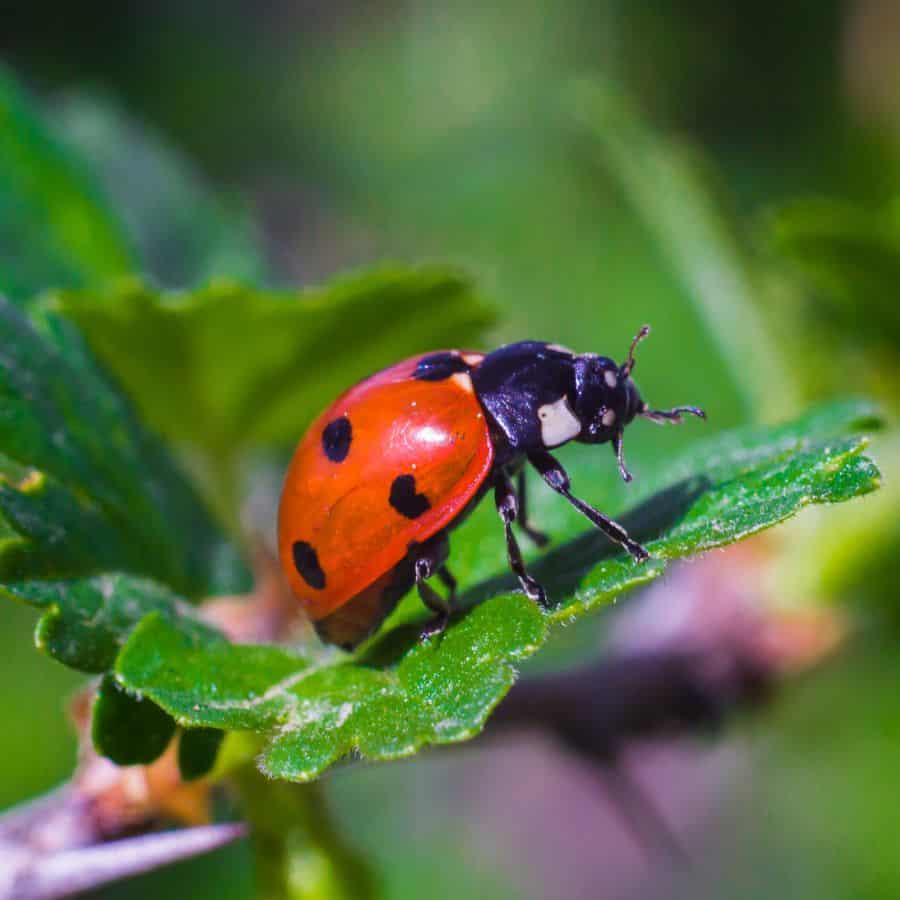
Forget what you’ve heard about expensive pest solutions. Ladybugs are the unsung heroes of natural pest management, patrolling your plants and feasting on aphids and other soft-bodied pests.
These tiny spotted insects are like the special forces of your garden. While the adults are helpful, it’s the larvae (which look like tiny alligators) that are the real aphid-destroying machines.
The difference between new and experienced gardeners is knowing how to attract these beneficial insects instead of reaching for chemical sprays that kill everything.
When you invite ladybugs, you’re not just controlling pests. You’re building a self-regulating mini-ecosystem.
The Ladybug’s Secret Menu: More Than Just Aphids
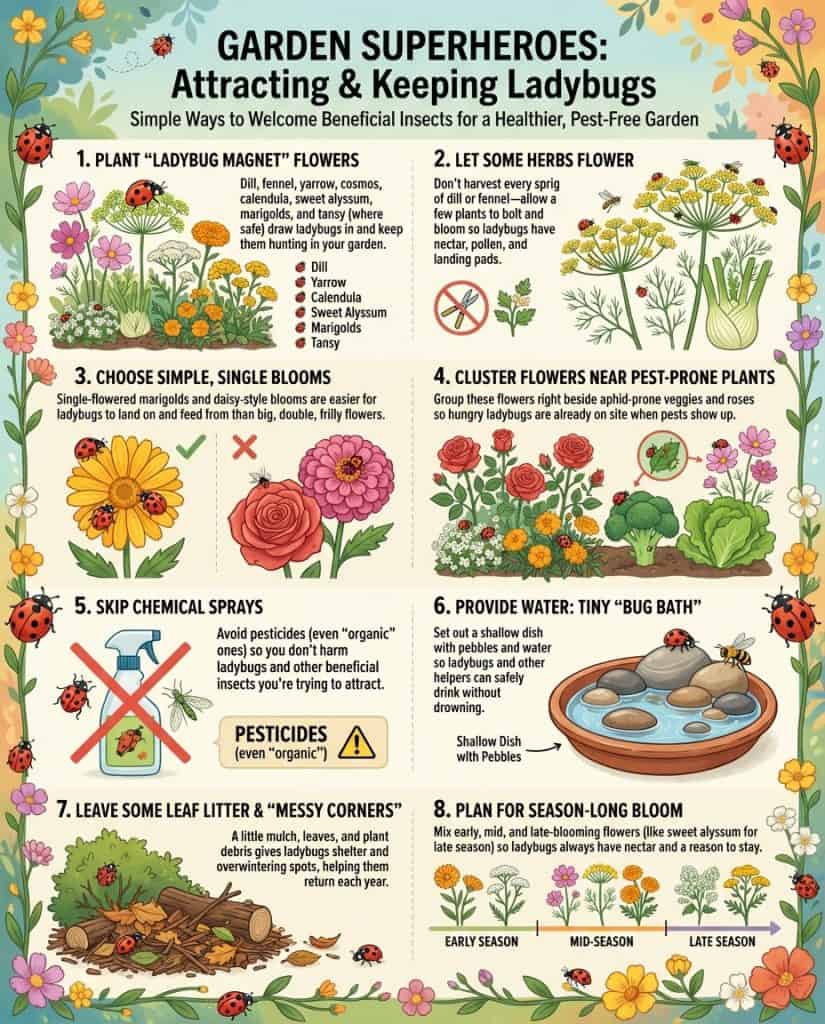
Here’s something that surprised me: adult ladybugs don’t just eat pests. They need nectar and pollen, too. Think of these flowers as ladybug cafés, serving up all the nutrients these beneficial insects need.
The best ladybug-attracting flowers share a common trait: flat or umbrella-shaped blooms that offer easy landing pads. Imagine trying to land on a tulip versus a daisy when you’re the size of a pencil eraser.
These blooms don’t just feed ladybugs. They create places where they’ll want to live, hunt, and reproduce.
That’s how you transform your garden from an occasional ladybug pit stop to a thriving ladybug home base.
8 Flowering Plants That Are Basically Ladybug Magnets
1. Dill: The Ultimate Ladybug Lure
Dill is like ladybug catnip. Those delicate umbrella-shaped flower clusters aren’t just pretty. They’re irresistible feeding stations.
The real trick for better pest control is simply letting your herbs flower instead of constantly harvesting them.
2. Calendula: The Sacrificial Decoy
Calendula’s bright golden blooms work double-duty in your garden. They attract ladybugs with abundant nectar while also acting as aphid decoys, drawing pests away from your vegetables.
3. Yarrow: The Perennial Powerhouse
Yarrow’s dense clusters of tiny flowers are like an all-you-can-eat buffet for beneficial insects.
Once established, this sturdy perennial needs virtually no care while delivering consistent pest-control benefits year after year.
4. Tansy: The Bold Attractant
With feathery foliage and bright yellow button flowers, tansy is a strong attractant for ladybugs. But watch out. This plant has a wild streak and can spread heavily. Keep it contained or embrace its naturalized charm in wilder areas.
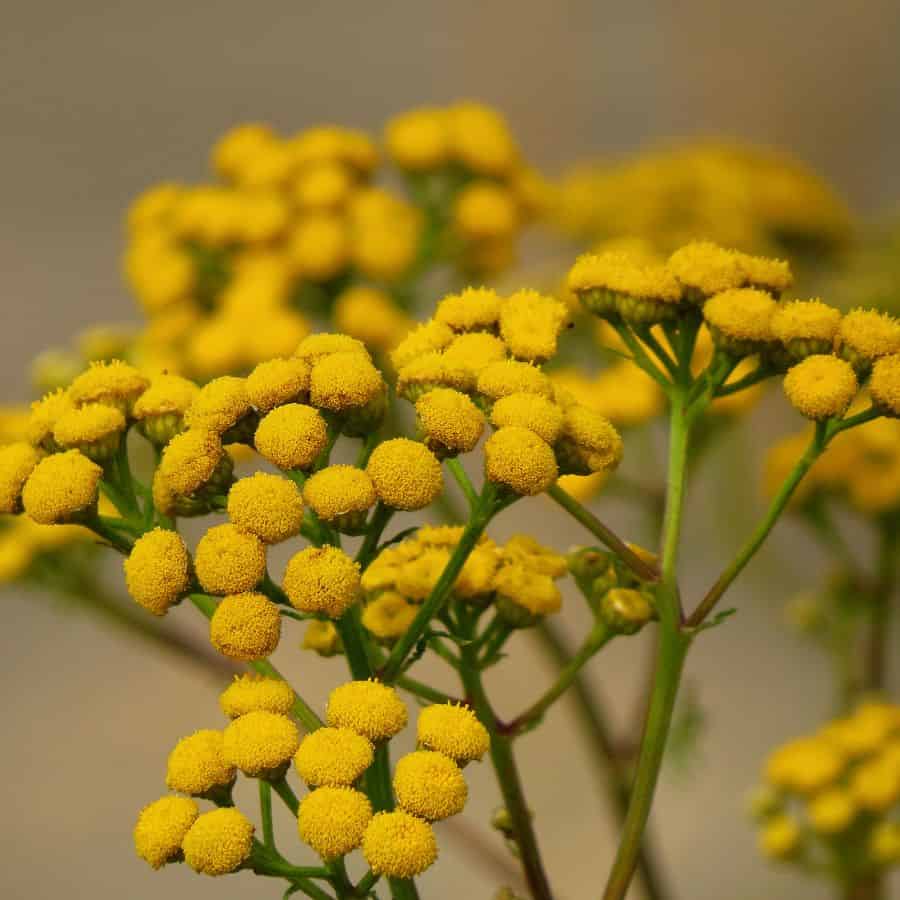
Note: Tansy is toxic to livestock and some pets if eaten, so place it carefully if you have curious animals.
5. Fennel: The Towering Insect Beacon
Like its cousin dill, fennel produces those irresistible umbrella-shaped flower clusters.
Let a few plants bolt and flower. The height of these plants (up to 6 feet) creates a beneficial insect highway from ground level to your garden.
6. Cosmos: The Low-Maintenance Miracle
Cosmos are easy-growing flowers that thrive in poor soil with minimal care, yet attract plenty of beneficial insects.
Their delicate, feathery foliage provides perfect shelter for ladybugs, turning these pretty blooms into ladybug nurseries.
7. Sweet Alyssum: The Season Extender
Sweet alyssum’s low-growing carpets of tiny white flowers keep blooming until first frost, providing important late-season nectar when other flowers have finished. Their spreading habit makes them perfect for edges and containers where they’ll spill over nicely.
8. Marigolds: The Versatile Defender
Here’s what matters most: simple, single-flowered marigolds outperform fancy double varieties when it comes to attracting beneficial insects.
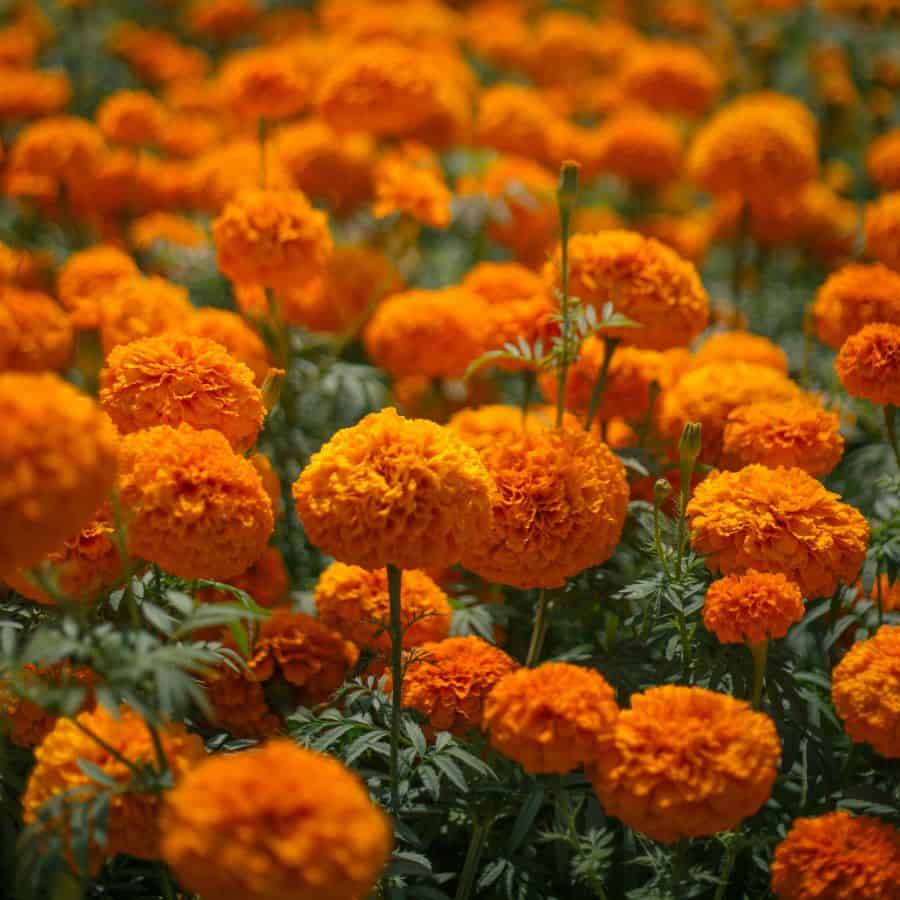
Their compact size makes them perfect companions for tucking between vegetables.
Transform Your Garden Into Ladybug Paradise (Beyond Just Flowers)
Flowers are just the beginning. Create a truly ladybug-friendly environment with these tips:
• Ditch the chemicals: Even “organic” pesticides can harm beneficial insects. Trust your ladybug army instead.
• Plant in groups: Cluster your ladybug-attracting flowers near pest-prone plants for maximum impact.
• Create a bug bath: A shallow dish with pebbles and water provides hydration for your six-legged allies.
• Leave some leaf litter: Those garden “imperfections” provide perfect overwintering spots for ladybugs.
• Mix flower types: Different bloom times ensure continuous support throughout the growing season.
What matters most is creating natural relationships between plants and beneficial insects. You’re not just controlling aphids. You’re restoring the natural balance that makes gardening rewarding.
The next time you spot a ladybug in your garden, remember. You’re not just looking at a cute spotted insect. You’re witnessing one of nature’s most efficient pest control systems in action.