Ever walked to your coop expecting breakfast only to find… nothing? I’ve been there.
After years of inconsistent egg production, I finally figured out how to get consistent daily eggs.
The best part? It wasn’t expensive supplements or fancy equipment. A few simple adjustments transformed my occasional layers into reliable producers.

Why Your Egg Basket Is Empty
Before diving into solutions, let’s talk about why your hens might be holding out on you. Chickens are surprisingly sensitive creatures. When egg production drops, they’re not being lazy – they’re responding to their environment.
• Seasonal changes: Hens need 14-16 hours of light to maintain production. When days shorten in fall and winter, your egg supply often drops off quickly.
• Age and genetics: Older hens naturally slow down. And some breeds are excellent layers while others are more casual about the whole thing.
• Stress and diet: Stress tanks productivity, and eggs require proper nutrition. You can’t build something from nothing.
9 Ways to Boost Egg Production
1. Add More Light
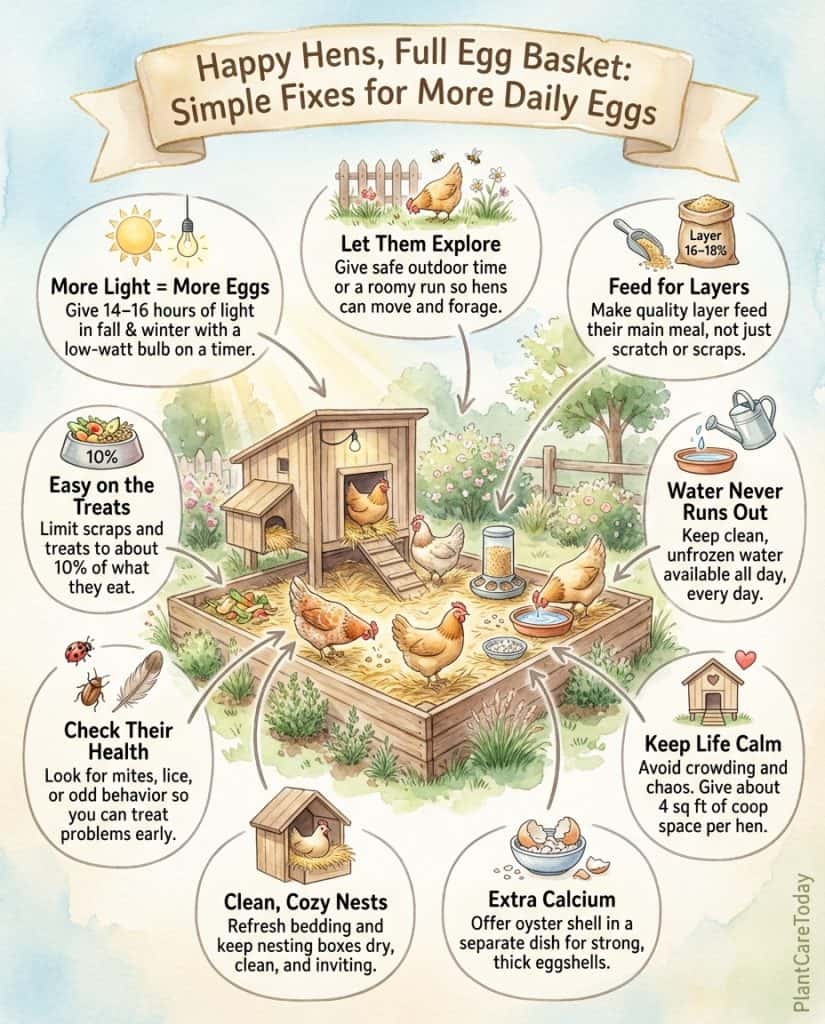
Your hens need 14-16 hours of light daily. During shorter winter days, consider adding supplemental lighting in the coop.
A simple timer with a low-watt bulb can make your hens think it’s still summer. Often, a $10 light bulb is all it takes.

2. Use Quality Feed
Quality layer feed with 16-18% protein is the foundation of egg production. Think of it as the difference between trying to build muscle on rice cakes versus a proper protein-rich diet.
Skimping on quality feed is like expecting a sports car to run on watered-down gas.
3. Keep Water Available
Here’s a surprising fact: hens can completely stop laying after just one day without water. Your chickens are about 65% water, and eggs are 75% water.
No hydration means no eggs. Make sure water is clean, unfrozen, and always available. I check twice daily.
4. Reduce Stress
Chickens get stressed by things we’d never consider. Overcrowding, loud noises, new flock members, or predator threats all affect laying.
When your hen feels like she’s living in chaos, egg production drops. Give each hen 4 square feet of space and introduce new birds gradually.
5. Provide Calcium
Weak, thin-shelled eggs mean your hens need more calcium. Eggshells require a lot of calcium to form properly.
Oyster shells work great for building sturdy eggs. Keep them available free-choice in a separate container from regular feed.
6. Keep the Coop Clean
A clean coop with fresh bedding, proper ventilation, and dedicated nesting boxes signals to your chickens that this is a safe place to lay.

Clean nesting material is particularly important. Hens are pickier than you might think.
7. Check for Health Issues
Parasites can drain egg production from your flock. Check birds regularly for mites, lice, or unusual behavior. A healthy hen is a laying hen. When was the last time you really inspected your birds?
8. Limit Treats
Your hens love treats, but they shouldn’t form the foundation of their diet. Limit treats to 10% of their diet.
Those kitchen scraps might make you feel generous, but they’re nutritionally empty compared to quality layer feed. Don’t expect your hens to produce on junk food.
9. Allow Time Outside
Free-range hens are typically healthier and more productive. The difference between coop-bound and free-range hens is real.
Even a few hours of supervised ranging can increase egg quality and quantity.
What to Expect
When I made these changes, my egg production improved within just 2-3 weeks. I went from sporadic eggs to a reliable daily harvest. This isn’t complicated, but it does require consistency.

Your chickens are telling you something with their laying patterns. They’re not being stubborn – they’re responding to the conditions you’ve created. Pay attention to what their egg production is saying.
The difference between new and experienced chicken keepers is simply the attention they pay to these details. Implement these tips consistently, and you’ll have more eggs than you know what to do with.