Forget what you’ve heard about spring being the only time to sow seeds! The game-changer for your garden isn’t what you think.
It’s actually winter’s chill that transforms ordinary seeds into spectacular spring showstoppers.
While your neighbors are hibernating indoors, you could be secretly setting up the most vibrant garden on the block with just a handful of wildflower seeds and about 15 minutes of effort.
(Did I mention this might be the most satisfying form of lazy gardening ever invented?)
Why Winter Is Your Secret Wildflower Weapon
I was surprised to learn that over 40% of wildflower species require cold stratification to germinate.
Nature’s design is pure genius here. These seeds need winter’s freeze-thaw cycles to crack their hard outer shells and trigger germination.
Instead of the ridiculous ritual of refrigerating seeds in damp paper towels (like some kind of botanical science experiment), simply let Mother Nature do the work.
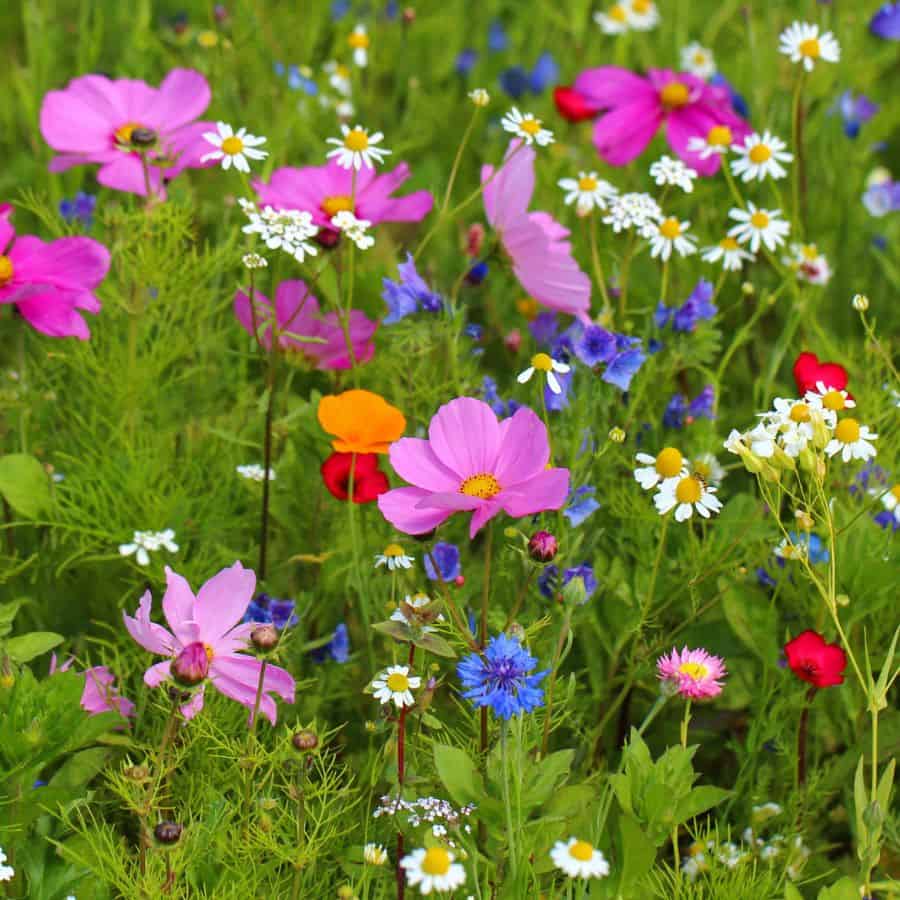
Your wildflower seeds will thank you with a dramatic spring performance that puts store-bought seedlings to shame.
Fall Sowing: Timing Is Everything (But Seriously Simple)
Think of fall sowing like playing chicken with winter. You want to hit that sweet spot when it’s cold enough to trigger seed dormancy but before the ground turns harder than your forgotten holiday fruitcake.
Here’s your easy-peasy technique:
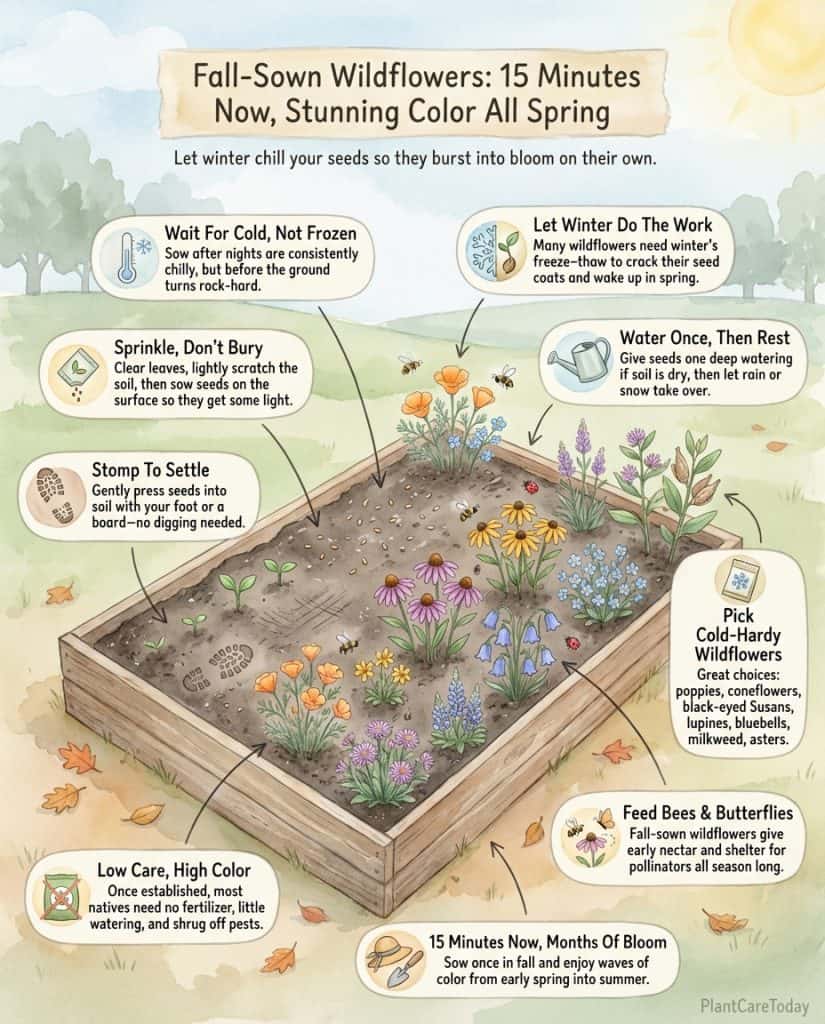
- When to sow: After consistent cold has set in, but the soil is still workable
- Soil prep: Clear away leaves and lightly scratch the surface (wildflower seeds need light exposure!)
- Planting depth: NO digging required. Just sprinkle seeds on the soil surface
- Securing seeds: Press seeds firmly into soil with your foot (that satisfying stomp is therapeutic!)
- Watering: One good drink, then put your hose in hibernation mode (Zones 3-5 can skip if snow is coming)
The secret most plant experts won’t tell you is that this minimal-effort approach actually mimics nature’s own planting methods better than our fussy spring rituals.
The Early Birds: First Spring Color Explosion
These four wildflowers are the garden equivalent of those annoyingly peppy morning people. They’ll burst into bloom while other plants are still hitting the snooze button:
- California Poppy (Zones 6-10): The drama queen of early bloomers – demands full sun, refuses transplanting, and delivers vibrant orange blooms that can increase pollinator visits by up to 30%
- Forget-Me-Nots (Zones 3-8): These tiny blue flowers are named ironically – they self-sow so enthusiastically you’ll never forget them (whether you want to or not!)
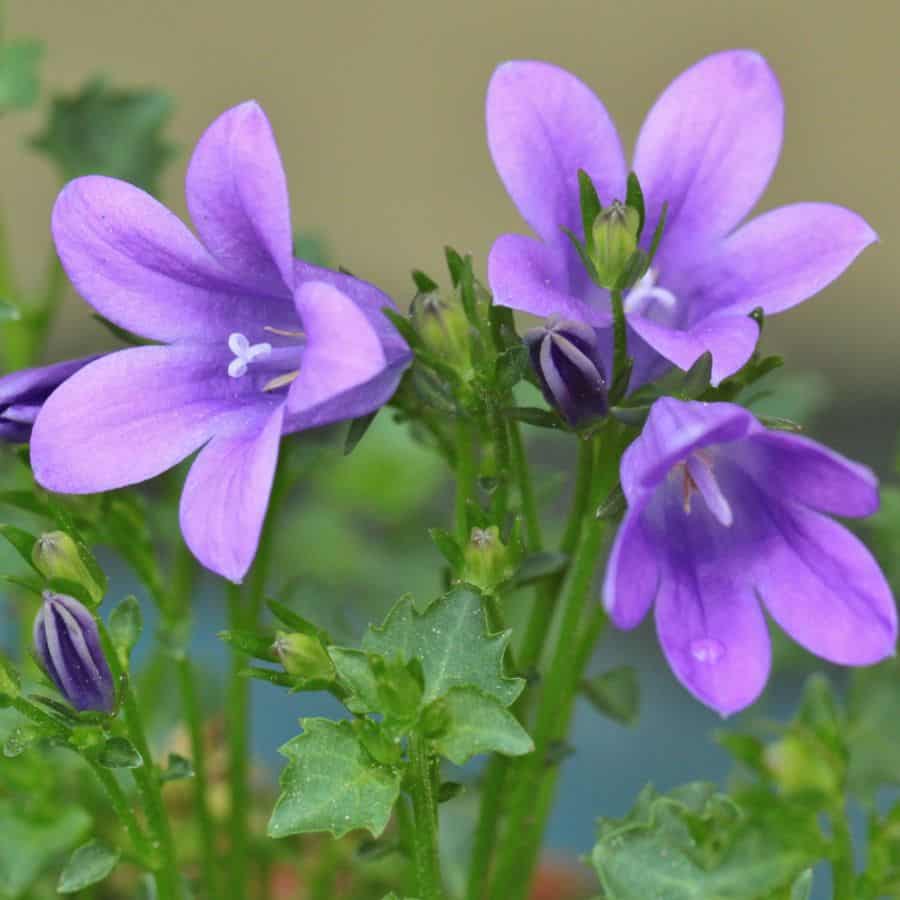
- Virginia Bluebells (Zones 3-8): Nature’s color-shifters start with pink buds that transform to true blue – then pull a disappearing act by summer
- Plains Coreopsis (Zones 3-9): These efficiency experts use winter to develop robust roots for non-stop early color
Your garden is essentially hosting a slumber party for these seeds all winter. They’re gossiping under the soil while charging up for spring’s grand reveal.
The Mid-Spring Powerhouse Performers
Once the early birds have made their entrance, these mid-spring heavy-hitters take center stage with all the subtlety of a Broadway musical finale:
- Purple Coneflower (Zones 3-9): Extremely demanding about its cold period, without winter chill, these seeds will ghost you entirely
- Black-Eyed Susan (Zones 3-9): Fall planting lets this biennial form a sturdy leaf rosette underground – think of it as pre-season training for spectacular gold blooms
- Wild Columbine (Zones 3-9): These delicate-looking flowers have a non-negotiable beauty routine requiring winter’s freeze-thaw cycle
- Lupine (Zones 4-8): Seeds wrapped in armor-like coatings that winter naturally “sandpapers” smooth. Their roots grow deep enough to practically reach China
The difference between amateur and pro plant parents is simply understanding that these perennials need winter’s tough love.
It’s like how going to the gym feels terrible but delivers results. Winter stratification is nature’s boot camp for seeds.
The Summer Sustainers: Heat-Defying Heroes
If your garden typically looks incredible in May but throws in the towel when summer heat arrives, these four wildflowers are your salvation:
- Butterfly Milkweed (Zones 3-9): Develops a sensitive taproot that makes later transplanting practically impossible. Fall sowing is the only logical approach for this monarch magnet
- Smooth Blue Aster (Zones 4-8): The fashionably late bloomer that uses winter to build a foundation for the biggest, bushiest late-summer color explosion
- Clarkia/Godetia (Zones 6-10): Fall-sown plants handle competition and heat stress with remarkable resilience compared to spring-planted cousins
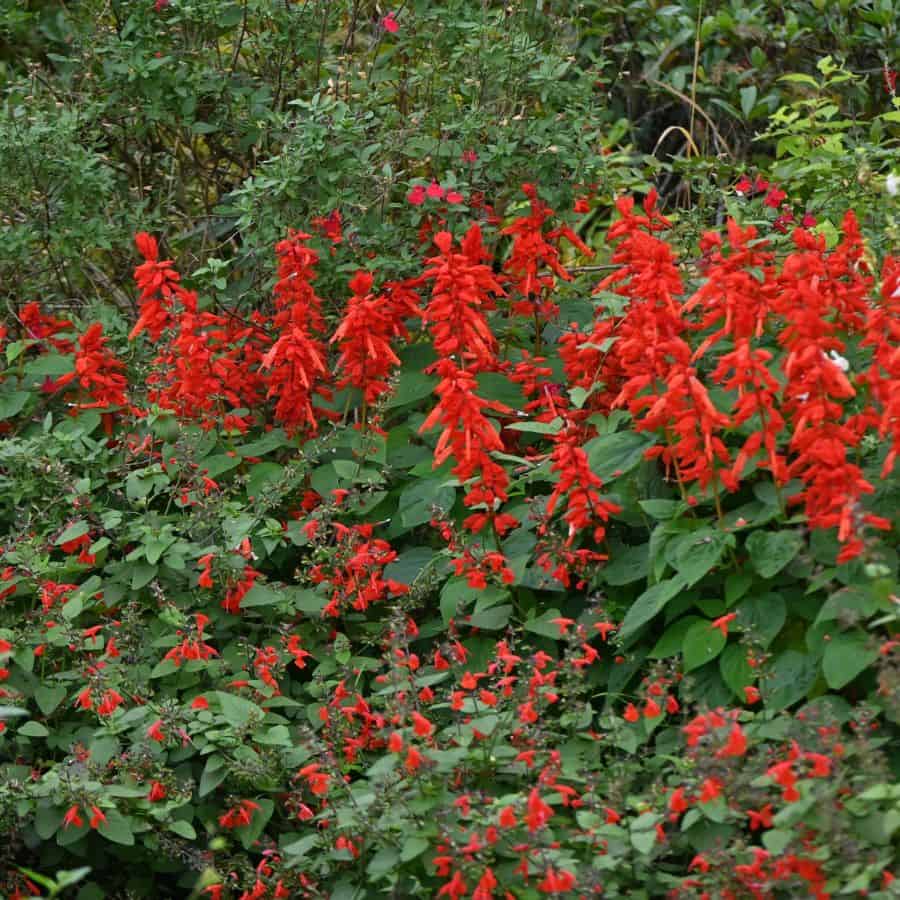
- Scarlet Flax (Zones 6-9): Winter naturally cracks its tough seed coating, resulting in earlier, longer-lasting blooms of delicate red flowers
That winter chill isn’t torturing these seeds. It’s literally their natural habitat. Like sending a snowboarder to the mountains, you’re giving these Mediterranean natives exactly what their DNA craves.
The Lazy Gardener’s Environmental Triumph
Your wildflower “neglect” is actually an ecological breakthrough.
By sowing native wildflower species now, you’re creating crucial habitat for pollinators facing a catastrophic decline (native bee populations have dropped by 46% in some regions).
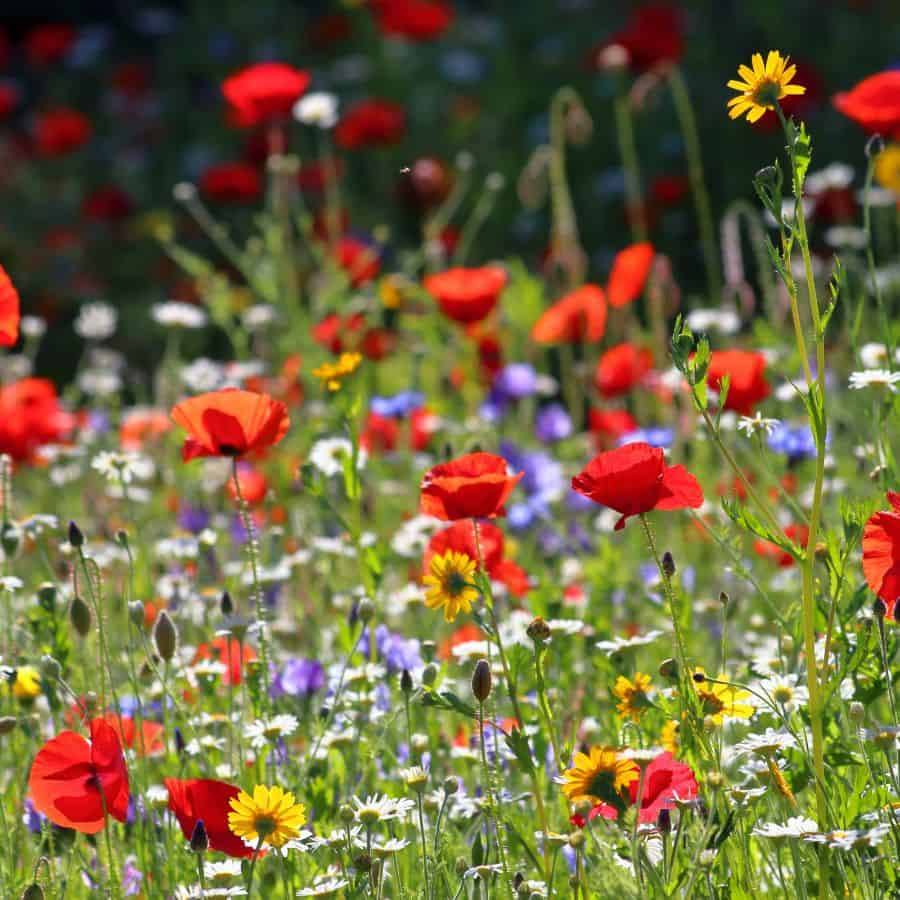
Better yet, these established wildflowers require virtually zero maintenance; no fertilizer, minimal watering, and complete resistance to most pests and diseases. Your “laziness” becomes both an environmental win and a practical time-saver.
So grab those wildflower seeds and get sowing before the ground freezes! Your future self will thank you when spring arrives, and your garden transforms into a vibrant, buzzing paradise while everyone else is still shopping for seedlings.