Taking cuttings from healthy, mature plants is an effective way to expand a plant collection. Using a rooting hormone powder will help your cuttings grow roots and take hold.
Rooting powders help you have more success growing strong, healthy plants from cuttings.
In this article, we will explain the use of rooting hormones and product options.
If a plant cannot grow roots on its own, try using a rooting compound.
There are many hardy plants that root readily. Among the best rooters are:
- Tradescantia
- Portulaca
- Fuschia
- Coleus plants – but I use root hormones on them anyway.
With these types of plants, you may not need to use a hormone rooting powder on the plant cuttings because they produce their own natural root hormones, making propagation easy without assistance.

Some plants naturally form roots while still attached to the parent plant. Several examples of this are:
- Various types of ivy
- Hanging Ficus
- Phalaenopsis Orchids
These plants spread quickly and grow new roots as they go. When you take a cutting of these types of plants, you should be able to find stems that already have roots started.
If not, new roots will grow quickly when the cuttings are placed in water or light, well-draining soil.
Some people recommend not using a rooting hormone on cuttings from very juicy plants such as Saintpaulia, Mother of Thousands, and various and sundry succulent plants. However, we do!
Why Do Some Cuttings Need Hormones For Rooting?
When you take a cutting from a plant, it naturally produces a hormone that promotes rooting, helping it develop roots at the base.
When the leaves of the cutting are exposed to light, a chemical known as Indole-3-acetic acid is produced. This is a rooting hormone.
This substance travels from the leaves to the end of the stem.
When enough has accumulated at the base of the cutting, the substance signals the plant’s cells to begin the process of growing roots. Commercial rooting powders help facilitate this process.
The hormones stimulate root growth in “off” times of the year.
In addition to the type of plant used as a cutting, the time of year significantly affects the success of starting plants from slips.
For most plants, late spring and early summer are natural growth periods, so starting your cuttings at this time is generally better.
When this is impossible, you can dramatically increase your chances of success by using a root booster for plants, even on plants that normally root well on their own.
Which Cuttings Are Hardest To Start?
Plants grown from woody stem cuttings do not grow roots easily. When you take a cutting from a woody plant, such as:
- Bougainvillea
- Wax Plant (Hoya)
- Allamanda
- Hibiscus
- Azalea
You may find that you have a very long wait until roots form, if they ever do.
These plants benefit from the use of root growth hormones in powder, liquid, and gel form. Interested – Try the Clonex rooting gel at Amazon..
How Do You Use Rooting Hormone?
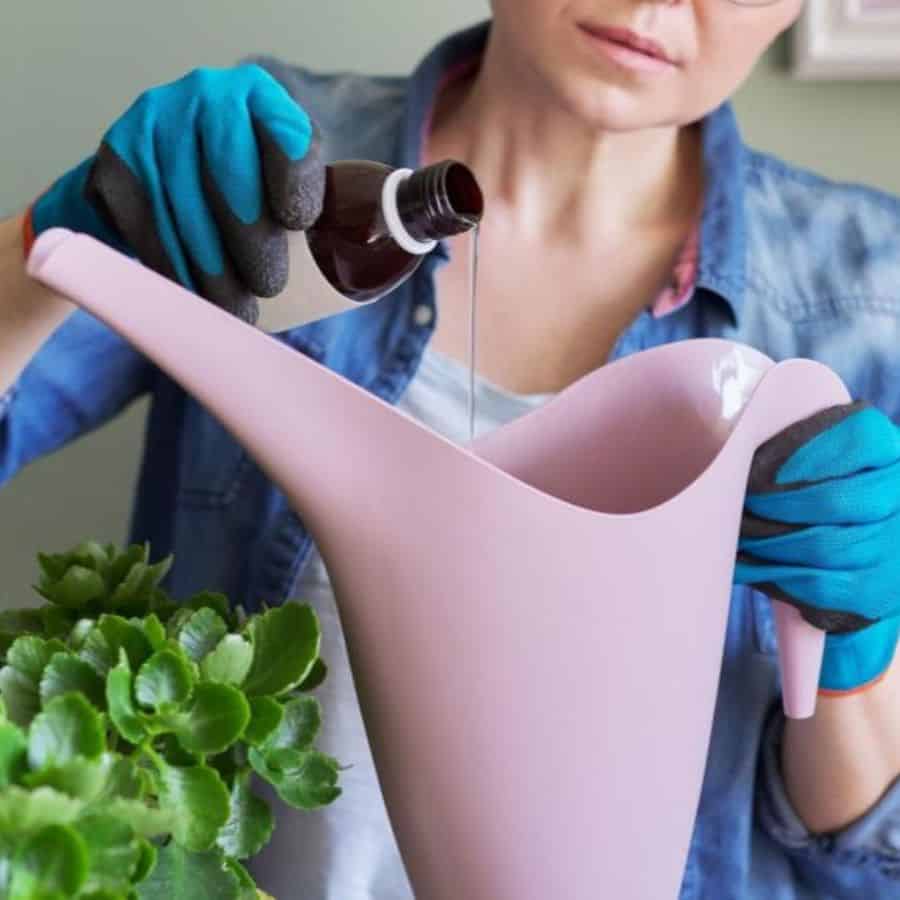
There are a couple of ways to use this rooting solution. You can choose either a powder or a liquid.
Typically, rooting products are available in three strengths:
- #1 – is intended for use on soft, herbaceous cuttings.
- #2 – is intended for use on semi-hardwood cuttings.
- #3 – is intended for use on stubborn hardwood cuttings.
How Do You Use Rooting Powder?
Most rooting hormones are available as a powder that can be lightly dusted onto the end of a cutting.
Many people just dip the cutting into the container of rooting powder, and this is alright as long as your cutting isn’t wet. If it’s wet, it could contaminate the product.
If you are going to apply rooting powder to a cutting, apply it to the bottom half-inch to a full inch of the stem. Be sure all leaves have been removed from this section.
A commercial rooting powder for plants usually contains a very small amount of the rooting hormone. It may also contain a fungicide. The bulk of the product is an inert substance, such as talcum powder.
When applying rooting powder, be sure not to use too much, as excess can be detrimental. If your cutting is damp or has a lot of small hairs, it will tend to pick up and retain too much powder.
If this happens, gently tap or shake the cutting to remove excess product.
How Do You Use Liquid Rooting Hormone?
You can also use a liquid product containing the same active ingredients as rooting powder, but with an alcohol-based carrier instead of a dry powder.
To use this product, select the appropriate strength for your needs, then give your cuttings a quick dip to get them off to a good start.
NOTE: Personal Experience
A note from my personal experience. For most of my plant growing career, I’ve used the rootone rooting powder. However, I have used the liquid form in the rooting of Dracaena cane and yucca cane shipped in from Costa Rica.
The results compared to the rooting powder were just as good. The liquid rooting hormone could be sprayed making the application process easier.
When you dip your cuttings in the solution, let them stand for about five seconds so the product can penetrate the plant tissues slightly.
Plant your cuttings right away. If you leave them exposed for too long before planting, they may die of thirst.
What Are The Best Rooting Hormones Are Available?
As far as what is the best rooting hormone on the market? I’ve always used Rootone. You’ll find others on the market that contain the active ingredient – naphthaleneacetic acid or IBA – short for indolebutyric acid.
Rootone is a tried-and-true rooting hormone powder that has been on the market for decades. [source]
Here are some top sellers at Amazon:
- Garden Safe TakeRoot Rooting Powder – 2 ounces
- Miracle-Gro FastRoot Dry Powder Root Hormone – 1-1/4-Ounce Jar
- Hormex Liquid Concentrate Rooti Growing Hormone Powder – 4 Ounces – They also make Hormex rooting powder
4 Tips for Success With Cuttings
Rooting hormones can really help you get cuttings off to a good start, but they can’t do it alone.
You must also provide an ideal setting to encourage healthy growth and development. Here are four tips to help you have the best luck:
#1 – Although some cuttings need to be dried or “hardened” a bit before planting, never let this period extend too long. If cuttings are left to dry out entirely, they will just die.
Cuttings that need to be hardened a bit (e.g., geraniums and Pelargoniums) should be placed in an area with steady temperatures between 65 and 75 degrees Fahrenheit, out of direct sunlight, on newspaper or paper towels.
Leave them for a few days, apply rooting hormone, and plant.
#2 – Be sure to keep enough leaves on your cutting so that it can perform photosynthesis.
You don’t want it to support many large, showy leaves, but keep at least a couple of medium-sized leaves in place so the cutting can benefit from sunlight.
#3 – Your cutting needs more leaves in the wintertime than in the summertime.
#4 – Keep the humidity high around your cuttings. You may wish to cover them with plastic or glass to prevent drying out.
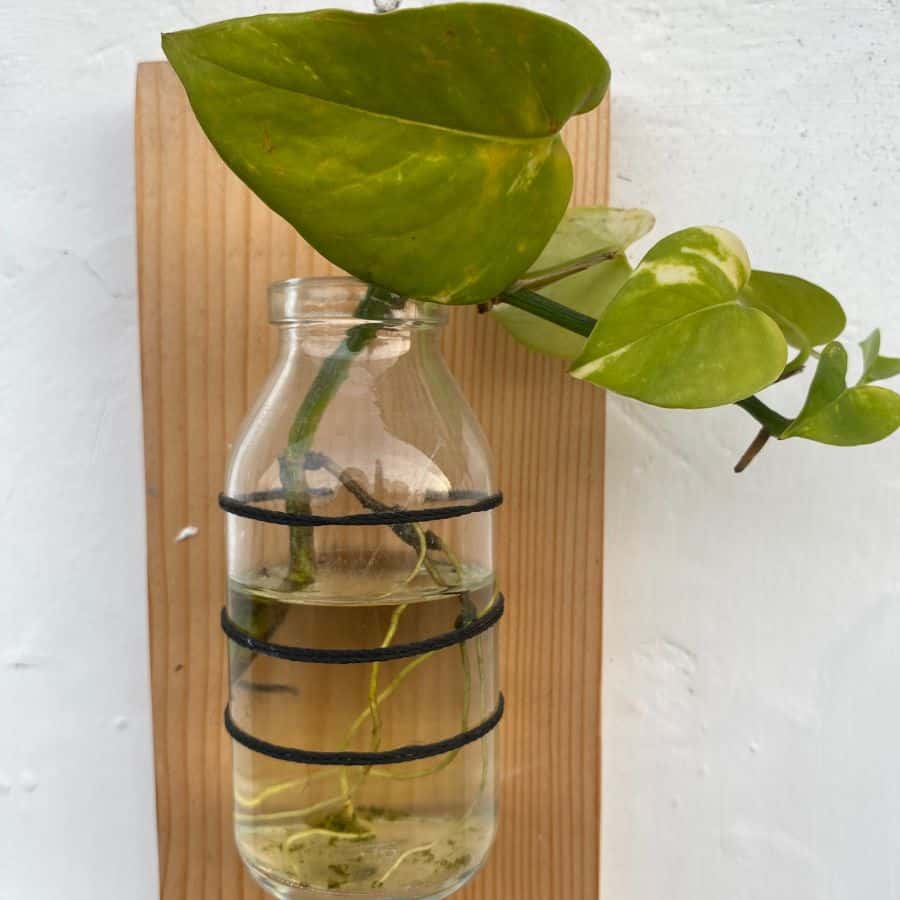
Rooting Hormone Gives Your Green Thumb A Boost
It is easy and affordable to propagate new plants from cuttings. You can usually get good results with a small plant section.
Many plants root in water or in a no-potting soil rooting medium. Some start easily in sand or perlite.
Lots of plants are easy to root. A rooting hormone is a must-have in the greenhouse and garden. Hormones help plants start during the offseason or with hard-to-root plants like citrus trees.